
// Faction Intel — Select File
9 Files · Signal OK
 No flag · no emblem
Nucleus Faction Registry · File ★
Independents
Unaligned · every frontier in the Seven Realms
No flag. No pension. No one to answer to.
Not everyone in the Seven Realms swears to a flag. Between the powers there are ice wastes, deep Moors, lawless mining towns and uncharted forests, and people live in all of them. They fix what the factions break, hunt what the factions fear, and sell what the factions pretend not to buy. They are too scattered to organize and too useful to get rid of.
“Loyalty to a paymaster lasts as long as the contract.”
18+ Viewer discretion advised. This file covers legal sex work and frontier customs in plain terms. All of it is fiction.
// 01 — Doctrine
How the unaligned get by
The Independents are not a power. They are everyone the powers never managed to sign: freelance engineers, contracted companions, licensed hunters, and frontier mystics who fight in a trance. They hold no ground and field no army. What they have is work that every faction needs done and no faction will put on a payroll.
The factions tolerate them the way a frontier town tolerates any useful oddity. Their loyalty is personal, contractual, or absent. That is their greatest strength, and it is the reason nobody trusts them fully.
- Wanted everywhere. Alliance megacorps, Imperial state enterprises, Directorate colonies and Covenant works all post to the same job board.
- No head to cut off. There is no capital, no chain of command and no treasury. Nothing an enemy takes ends them.
- One is enough. A single Wild Fang can tie up a full military squad.
- Open borders. A valid Psi Lynx licence is honoured at customs desks across the Inner Sol, the Imperium’s included.
- They go where armies will not. Radi-Mon tunnels, contested salvage, unmapped moons.
- Nobody comes for you. No medevac, no pension, no next of kin on file.
- Somebody else’s platform. ZenFusion takes 28 percent, the agencies take 31, and the Alliance sells the licence. Every independent pays rent to someone.
- The algorithm. Three complaints in a month freeze a Rigger’s profile. Appeals rarely succeed.
- Too scattered to bargain. They cannot strike, vote or negotiate as one.
- Loyalty for sale. They turn up on every side of every conflict, sometimes across from each other.
// 02 — The Unaligned
Who they are
Four ways of living without a flag, and one creature that belongs to nobody. CIV marks a civilian occupation and FAU native fauna. Tiers follow the Codex class lines.


Riggers heading out on a surge job
// Class Record 01 · Independents
Rigger
The freelance engineers who keep civilization running while civilization pretends they do not exist.
- The work every faction needs and none will staff: repair, software, construction, sanitation, salvage, mining support
- Crossing faction lines. Everyone posts to the same platform
- Surge jobs, at double or triple pay
- The rating. Three complaints in a month freeze the profile
- Debt. Most spend their first two years paying off the gear
- Building a life. No employer, no stability, no plans
A Rigger bids on a contract, does the work, gets paid and moves on. There are no benefits, no pension, and no faction loyalty required. High-rated Riggers see the premium jobs first. Low-rated ones get the scraps.
The kit comes first, and it costs thousands of Atomic Dollars before the first job pays. Lenders around every spaceport sell starter kits at predatory interest.
“A STEM degree gets you registered. Everything after that is your problem.”— Riggers’ saying
ZenFusion
Founded as a Terra Alliance startup in the 2240s. It grew fast enough that the Corporate Chamber tried to nationalize it in the 2260s. The board saw the vote coming, packed up, and reincorporated in Xing Hong under a Prefect-granted charter. The Alliance lost its golden goose, and every other faction gained the labor pool overnight.
ZenFusion calls the 28 percent “service optimization fees.” Riggers call it the bite. Nobody is laughing.
Surge pricing
Dangerous work pays double or triple: Radi-Mon nest cleanup, hull repair in a micrometeorite storm, salvage in contested zones where Fenris scouts may still be about. Riggers who need money fast take them.
Most come back fine. Some don’t.
The life
Riggers are overwhelmingly men. Most bounce between spaceports and temporary housing with everything they own in a kit bag and a Watch profile. Marriage prospects are grim, and the smart ones do not pretend otherwise.
When the loneliness hits, many spend their earnings on Leased Lilies. A Lily does not ask where you will be next month. Some Riggers keep a regular arrangement with one: not a relationship, exactly, but familiar skin and a name somebody remembers. It is enough to keep going.

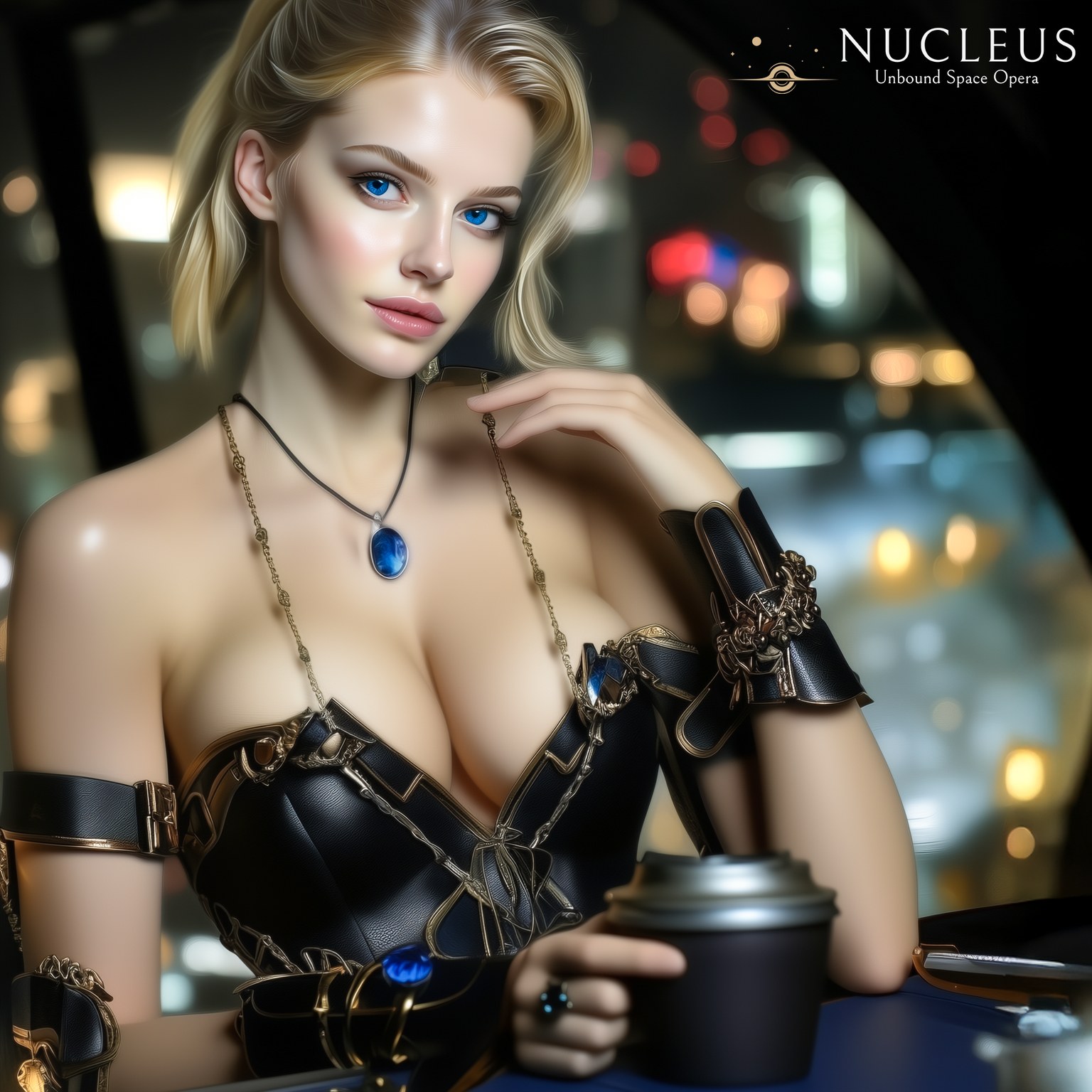
Leased Lily
// Class Record 02 · Independents
Leased Lily 租賃百合
Legal, contracted sex work, and one of the most valuable industries in the Sol System.
- Income an office job cannot match
- Legal cover. A sponsored Lily has screening, insurance and someone to take a dispute to
- Dependence on the agency
- The shadow market. Unsponsored work pays in full and protects nobody
- Opinion. Not everyone sees whores as people.
Two things made the profession. Medi-Vap ended disease, and the economy ended the jobs graduates used to take. For many, and for women leaving college most of all, Lily work pays what no office will.
In Xing Hong a Lily must work under a sponsoring agency, which screens clients, carries insurance and handles disputes. Critics say the system breeds dependency and protects poorly. Supporters say the alternative is a dangerous client and no recourse. The district councils have argued it for years and passed nothing.
The shadow market
Unsponsored Lilies keep everything they earn and carry all of the risk. The Prefect’s administration condemns the practice officially. Enforcement depends on the district: Lion’s Constables investigate hard, Dragon’s look the other way, Eagle’s corporate security barely cares, and Opera’s Covenant authorities forbid the trade altogether.
Average rent in the city is $3,000 AD a month. One premium appointment pays $800. The math pushes people toward whatever works.
The standard contract
One year, renewable annually. The lessee covers the Lily’s financial needs in exchange for availability and compliance. Ending it early means repaying the expenses.
What people think
Venus celebrates its Lilies openly, and several of its politicians are publicly in the business. Admirers call it the Pleasure Planet. Detractors call it Lust & Rot.
Xing Hong is more divided. Traditionalist immigrants from the Covenant and the Imperium see moral decay. Others see people being practical in a hard economy. Prefect Dilinur neither encourages nor restricts: the industry is too large to touch without consequences.

Sigrun Fjeld, bounty hunter, Xing Hong
// Class Record 03 · Independents
Bounty Hunter
A freelance killer of Radi-Mons and wanted men. Most are civilian-track Psi Lynxes: the Alliance licenses them, and they work for whoever posts the bounty.
- Jobs no garrison is sent on. Xing Hong pays hunters to scout the Radi-Mon tunnels under the city
- Working where no army may go
- Buying what others cannot: Nucleus Swords, military Thermal Axes, amplifiers
- The renewal. Miss it and the boards, the dealers and the customs desks all lock you out
- Dying cheaply. A city can afford to lose hunters
- The licence forbids acting against Alliance interests
The boards will not verify a kill without a valid licence, and dealers will not sell serious weapons without one. So nearly every hunter pays the Alliance for the right to work, whoever the client is.
Hunters gather where the boards are. In Xing Hong that means Dragon District: Bounty Board #7, and the cheap bunks and hot meals of the Slumbering Mantis Inn a short walk away.
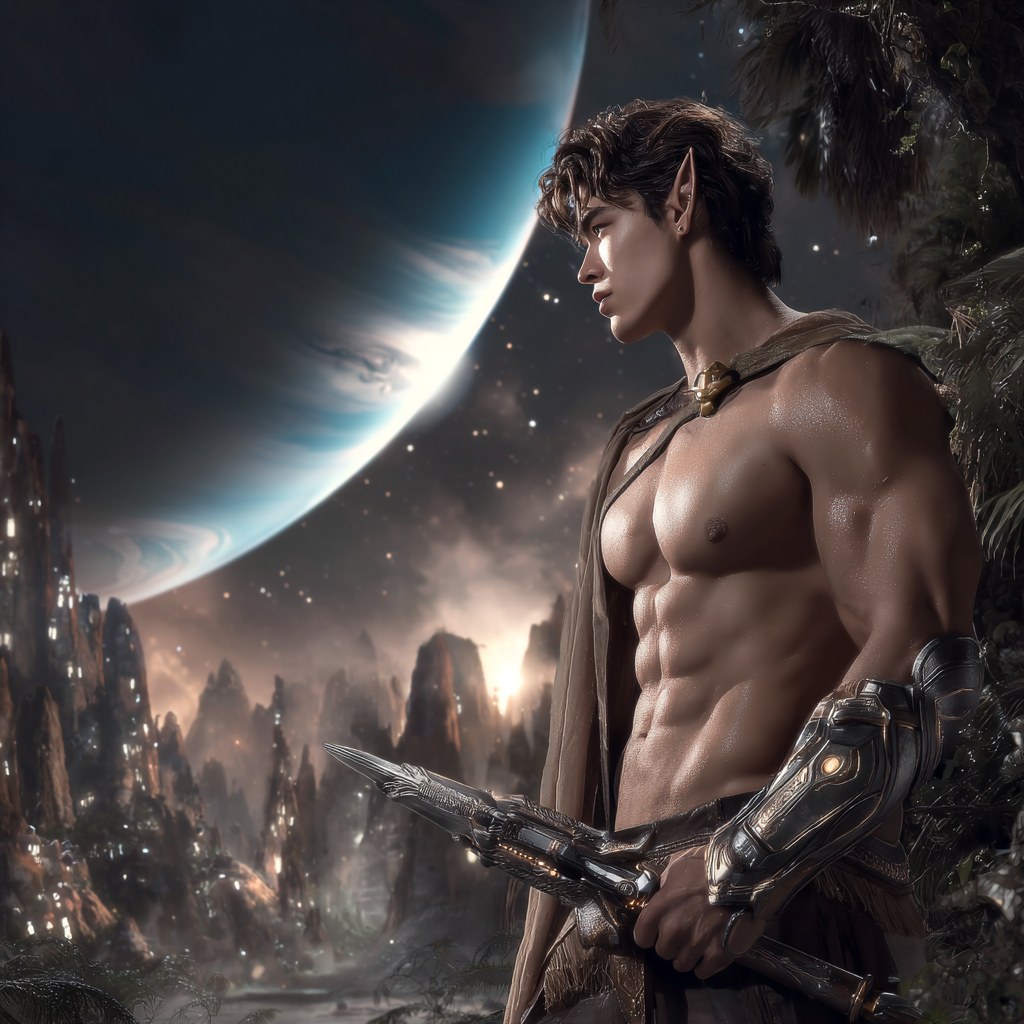



A Wild Fang on the Proximan frontier
// Class Record 04 · Independents
Wild Fang जङ्गल
Frontier hunters who range the worst ground in the Seven Realms with blades and the spirits they have learned to wear. They do not command beasts. They become them.
- Fighting alone. One can tear through what would tie up a squad
- Needing nothing. The tradition takes wilderness, a weapon and a teacher
- Reading ground, weather and Moonwings
- Polite society. Long channeling wears away social instinct and impulse control
- Staying hired. Loyalty to a paymaster ends with the contract
- Anything that has to be done from a distance
The discipline grew out of shamanic traditions far older than the Atomic Era: Balinese trance, Austronesian spirit walks, Amazonian visions, the vision quests of the First Nations. A Wild Fang reaches the state through meditation, through sex under an open sky, or by hunting until exhaustion breaks something loose. Movement turns fluid and predatory. Pain lands differently. The thinking mind stays, but it stops pretending to be in charge.
Soldiers who have survived fighting one all say the same thing: “Like some wild monkeys in human form!” Wild Fangs do not disagree. They just do not hear an insult in it.
“To live as great nature’s beasts is an elegant way of appreciating life itself. Let them love as they will, where they will. Their freedom is earned.”— Primarch Moro, whose Horde shares Proxima with them
Museum pieces
The blades, spears and chain-weapons look ancient, and that is deliberate. Zephyrium holds an edge sharper than steel and hums with psionic resonance, and it goes through modern armor as if the armor were not there.
Technology puts distance between the hunter and the kill. Wild Fangs close it. Rifles work fine. They just feel like cheating.
What they wear
As little as the weather allows: loincloths, wraps, a cloak when it freezes. Bare skin lets Aether move during channeling. It is also simply how they live.
What they do wear is history. Teeth from kills, scales from dead companions, Zephyrium jewelry from a rare visit to a settlement. Another Wild Fang can read where you have been from your necklace. Outsiders call the look primitive. Wild Fangs call armor what prey wears when it is scared.
On the trail
Most have no home. Years pass between settlement visits. Two Wild Fangs meet on a trail, share a camp for a night or a week, take each other to bed until both are satisfied, and walk off in different directions without promising anything. Children born out there learn to hunt and channel before they learn to read.
Sol tourists call it breeding like animals. Wild Fangs have heard it. They shrug and go back into the trees.
Their goddess
Many Wild Fangs worship Seed Dumu, including Proximans with no tie to Chinese culture. They carry a small phoenix totem and toss hand-carved white blocks before taking a contract or choosing a mate. Nobody has explained how the faith reached them.


A Moonwing at rest, in its default silver-white glow
// Class Record 05 · Independents
Moonwing 月羽蝶
Chandra-paksha in Devavāṇī. A palm-sized glowing butterfly from Shashan that drinks stray emotion, belongs to no faction, and has never once been seen to hatch.
- Telling you what somebody nearby is feeling
- Repairing itself. A wounded Moonwing is whole again within hours
- Being explained
Moonwings do not visit flowers. They gather wherever minds are busy: sleeping camps, festivals, deathbeds, the edges of battlefields. For a few minutes after one feeds, its glow turns a vivid colour drawn from the mind it drank from. Every wing pattern is unique, built up over a lifetime of flights and feedings.
“Ask the wings what you were feeling. They will not lie.”— Proximan saying
- AzureExcitementLunar
- GoldDeterminationSolar
- VioletLustMirage
- RedWrathEclipse
- GreenTranquilityVoid
Moonwings arrive in Nucleus Volume 3: Warrior’s Womb.
Why the argument stands
Two centuries, and no clean test case. Feeling and alignment travel together in living minds, so both lists predict the same glow every time.
The 108
Every mature swarm numbers exactly 108. Lose one, and a replacement arrives within days from nobody knows where. The Rakshasa hold the number sacred and refuse to investigate.
The population never grows and never shrinks, and a Moonwing heals the way an Indra Fountain does. Some Covenant scholars point at the Nirboh. There is no proof, and no better explanation.
The Landing
Tradition holds that a Moonwing lands only on someone whose heart is clean in that moment: no malice, no deceit. A landing is a public omen. Hardened hunters have wept over one.
One drifting past a couple is said to bless whatever the two of them are making: a bond, a vow, a child.
Reading the weather
Wild Fang shorthand, taught to paying clients and trusted strangers.
Azure gathering over a camp: good news arrived today.
Gold pooling by a doorway: a healer works inside. Or a warrior does.
Violet deep in the trees: someone is having sex. Give them privacy, or join them.
Red drifting on the wind: a fight upwind. Count your ammunition, or your blades.
Green settling low and still: someone nearby has made peace with something. Walk softly.
// 03 — People
Who you might meet
Nobody commands the Independents. These are five of them worth knowing. Full dossiers are in the Characters registry.
 Main castSigrun FjeldCivilian-track Psi Lynx and unlicensed Leased Lily. Violence, prostitution, plus an axe named Járn.
 Rigger · Main castZhi-Xin WuTaiwanese software Rigger on ZenFusion, rated 3.7 stars. Raising a hatchling named Håkon.
 Fusion Smith · Forge ZenithEmmanuel BoatengQuit Griot training for odd jobs. Works free for anyone who brings him something from beyond Sol.
 Wild Fang · ShashanTaṇhāBorn on Mt. Jade Phallus. Works for anyone whose money spends, and will kill for chocolate.
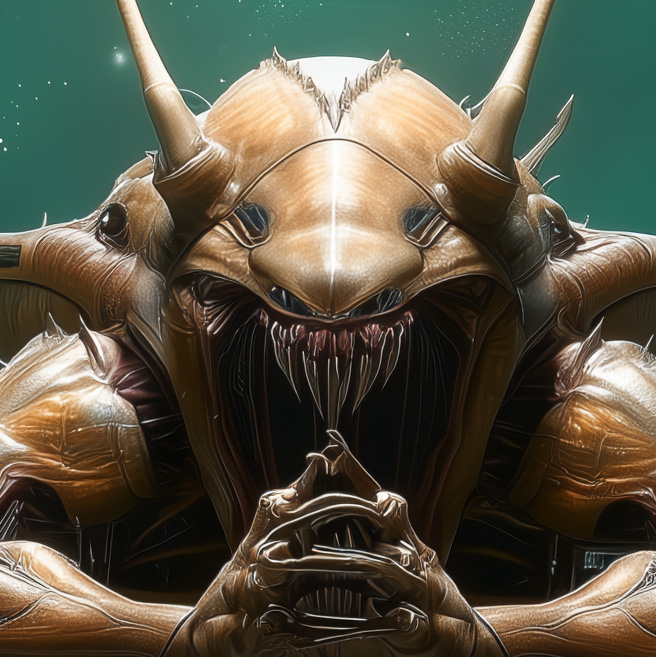 Elder Skuggr · Aqueduct wardenHreintA Fenris bile-spitter who taught himself to speak, and then to choose. “Clean mess.”
// 04 — Territory
Where the flags thin out
The Independents hold nothing. These are the places where nobody else holds much either.
No register of the unaligned exists. Locations are from ZenFusion job data and Accord field reports, 2295.
- Women 86%
- Men 11%
- Non-binary 3%
Municipal Registry, sponsored Lilies only. Nobody counts the unsponsored.
// 05 — Strategic Assets
What they depend on
An independent owns a kit bag and a reputation. Everything else on this list belongs to someone who takes a cut.
The only contract-engineering platform in the Seven Realms, chartered in Xing Hong. Two million matches a day, and 28 percent of each.
Sold by the Terra Alliance. Bounty boards, weapon dealers and customs desks all check it.
A posted price and a verified kill. Xing Hong’s boards send hunters into the tunnels the city cannot afford to garrison.
Screening, insurance and dispute handling for a Lily, for 31 percent of what she earns.
Starter kits at predatory interest. The first two years of most Rigger careers belong to them.
It ended sexually transmitted disease, which made the Lily trade possible. It also repairs what surge jobs do to a body, if the casualty is reached in time.
// 06 — Diplomacy
How the powers use them
Nobody negotiates with the Independents. Each power has its own way of hiring them.
“Not officially recognized. Not officially persecuted. Too useful to alienate, and too dangerous to control.”— Atomic Accord survey, appendix on unaligned persons