
🔞 Content Advisory
This last section of this page contains explicit materials including nudity, lactation and ritual consumption of sexual fluids.
These are fictional psionic rituals integral to the Nucleus universe. Viewer discretion advised. Please ensure you are 18+ years old before proceeding.
Xing Hong
Xing Hong (煋妅) is Mars’s largest independent settlement and the only truly neutral territory in the Sol System. Located on the Hellas Basin’s northern rim, the city secured its independence in 2283 through Prefect Dilinur Altai’s diplomatic maneuvering, leveraging factional rivalries to ensure no single power could claim it without triggering opposition from the others.
Four major factions maintain permanent presence: the Imperium, Alliance, Directorate, and Covenant each hold influence over designated districts through appointed Deputies. The city’s governing philosophy is simple: keep rent low, keep food cheap, keep people alive. The rest can wait. With a population of 2.3 million, Xing Hong stands as a monument to pragmatic survival in a system torn by ideological warfare.
Once an Imperium of Dragons territory, Xing Hong’s ethnic composition reflects its colonial heritage. Imperial (East Asians) comprise 55% of residents, with Valorans at 13%, Maridians at 15%, Djinno at 4%, and Novians at 2%. The remaining 10% consists of Nordling refugees who came seeking shelter on Mars after the Fenris Horde seized control of the Nordic Commonwealth governing Jupiter’s moons.
Constable
The Constables are Xing Hong’s street-level law enforcement, a familiar sight across all six districts. They patrol markets, respond to domestic disputes, investigate crimes, and make arrests. Those are the daily work of keeping two million people from killing each other in a city where four rival factions maintain permanent presence.
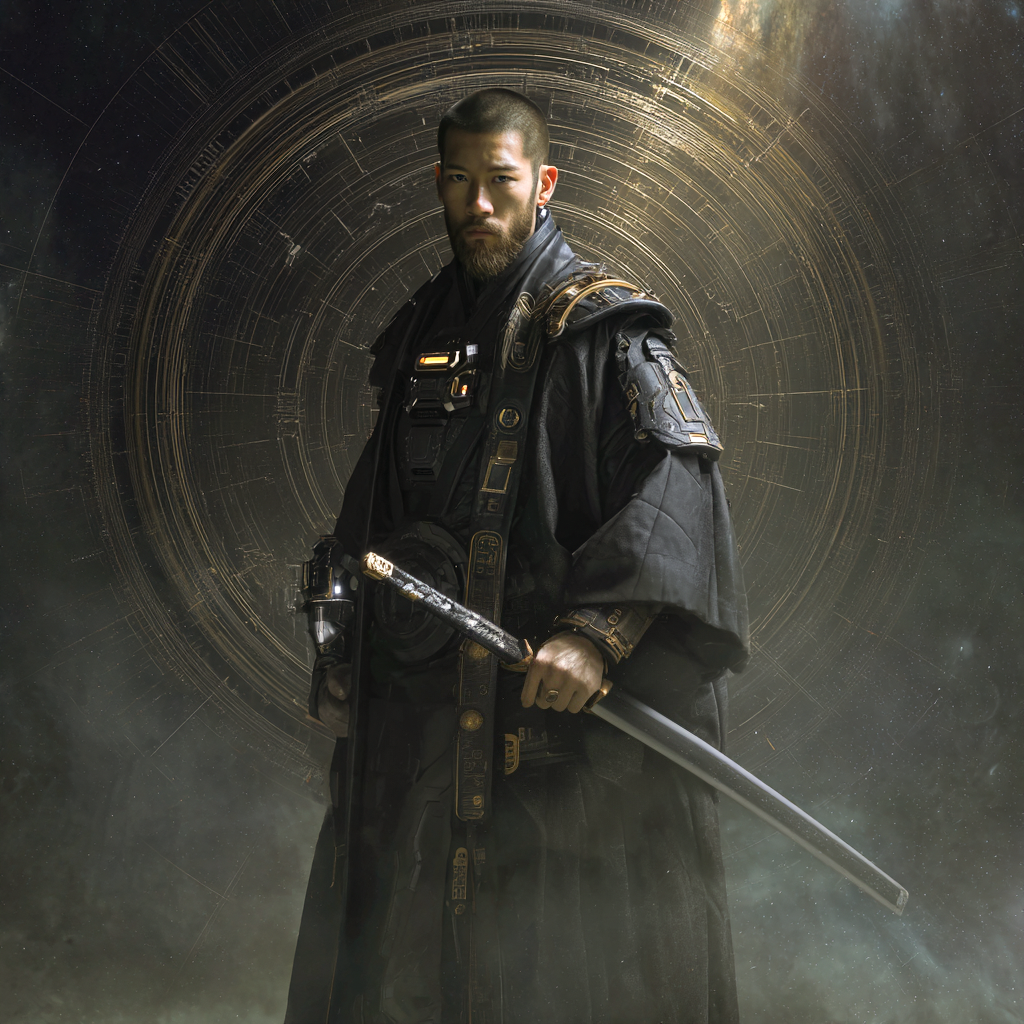
Their uniform consists of black fitted longcoats over tactical underlayers, with gold circuitry embroidery tracing traditional patterns along the sleeves and lapels. Standard equipment includes the Raiden shock katana, an electrified blade capable of non-lethal incapacitation or lethal force depending on power settings. The weapon serves both practical and symbolic purposes: visible authority without the aggressive posture of firearms, effective for close-quarters work in Xing Hong’s crowded streets and corridors.
Recruitment draws from all four major factions, requiring candidates to formally suspend factional allegiance during their service. This creates an unusual brotherhood: former Covenant zealots patrolling alongside ex-Directorate soldiers, Imperial defectors working shifts with Alliance veterans. The oath ceremony involves placing one’s Nucleus Watch into a ceremonial lockbox for twenty-four hours. A symbolic death of old loyalties before rebirth as Xing Hong’s own. Many find the transition difficult. Some find it liberating.
Constables learn quickly that “neutral law” means different things in different districts. Eagle District expects them to defer to corporate security. Dragon District expects them to look the other way on minor infractions. The Slum District expects nothing at all. Veterans develop an instinct for reading which rules apply where, and when to enforce the letter of the law versus its spirit. The unofficial motto, passed from senior officers to rookies: “Keep them alive. Keep them calm. Keep walking.”
Blackcoat
闇衣衛
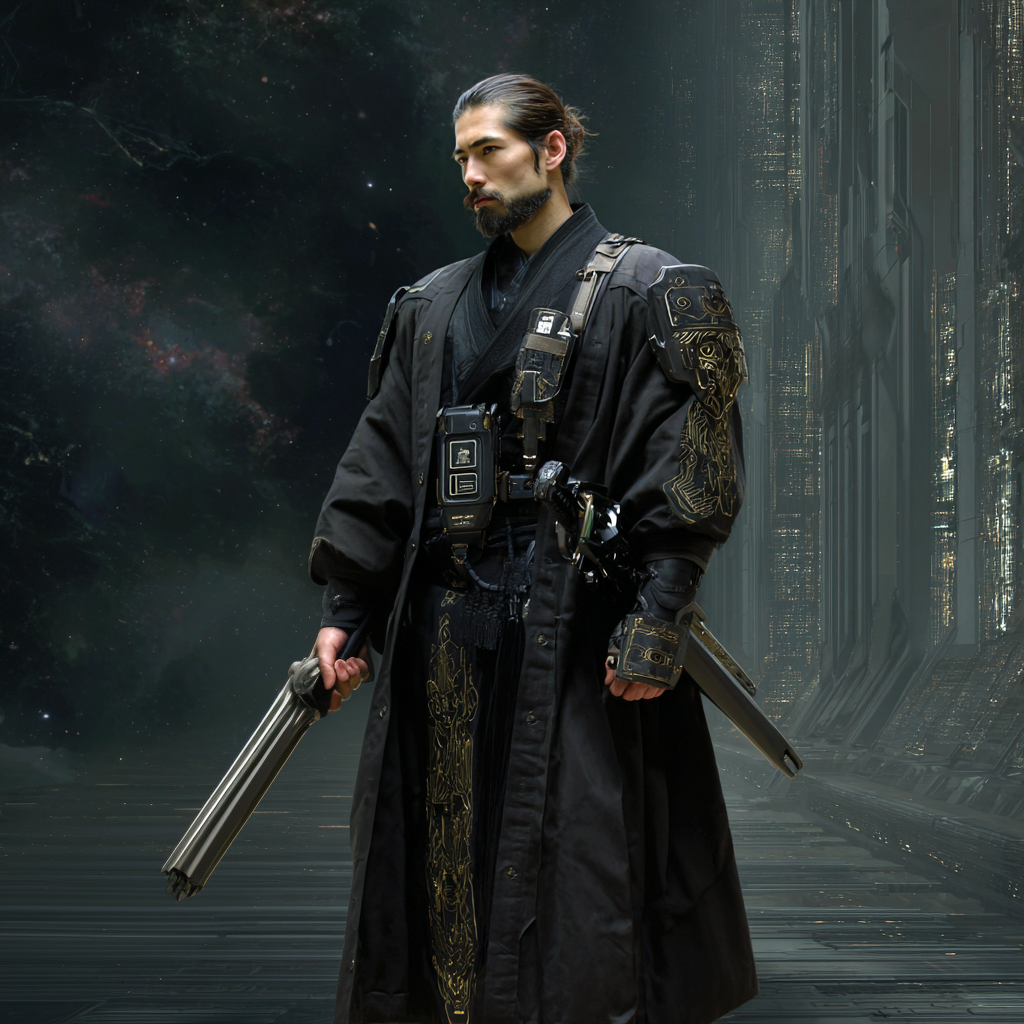
When Constables call for backup, the Blackcoats answer. Named for their heavier black greatcoats sporting decorative gold embroidery, Blackcoats serve as Xing Hong’s dedicated defensive infantry and psionic enforcers. They deploy during Radi-Mon incursions, large-scale civil unrest, and any situation requiring coordinated firepower or supernatural authority.
Standard Blackcoats
The backbone of Xing Hong’s defense. Their primary weapon is the Kowloon-7 Gauss Rifle, a semi-automatic precision weapon manufactured in Lion District. The rifle emphasizes accuracy and stopping power over rate of fire, designed for disciplined volley fire from defensive positions. An integrated bayonet attachment allows Blackcoats to hold their ground when enemies close to melee range.
Blackcoat doctrine centers on formation discipline: they train to hold lines, establish overlapping fields of fire, and maintain cohesion under pressure. Individual heroics are discouraged; coordinated defense is everything. Recruits undergo eight weeks of intensive formation drilling before ever touching live ammunition. The training philosophy is simple: the line holds, or everyone dies.
The unit earned its reputation during the 2295 Fenris assault on Dragon District. When Skarn’s forces breached the outer defenses, Blackcoat formations held defensive lines for six hours until Alliance reinforcements arrived. Their volley fire cut down wave after wave of Bone Fiends attempting to breach civilian shelters near the Slumbering Mantis Inn.
Unlike Constables, Blackcoats maintain permanent garrison posts rather than walking beats. Phoenix District’s government tower, the water treatment facilities, the atmospheric processors. Anywhere that Xing Hong cannot afford to lose.
Psionic Blackcoats
The elite tier. Selection is merciless: from an average of ninety thousand annual applicants, exactly six are chosen each year. Candidates must demonstrate psionic aptitude and the psychological profile the order requires.
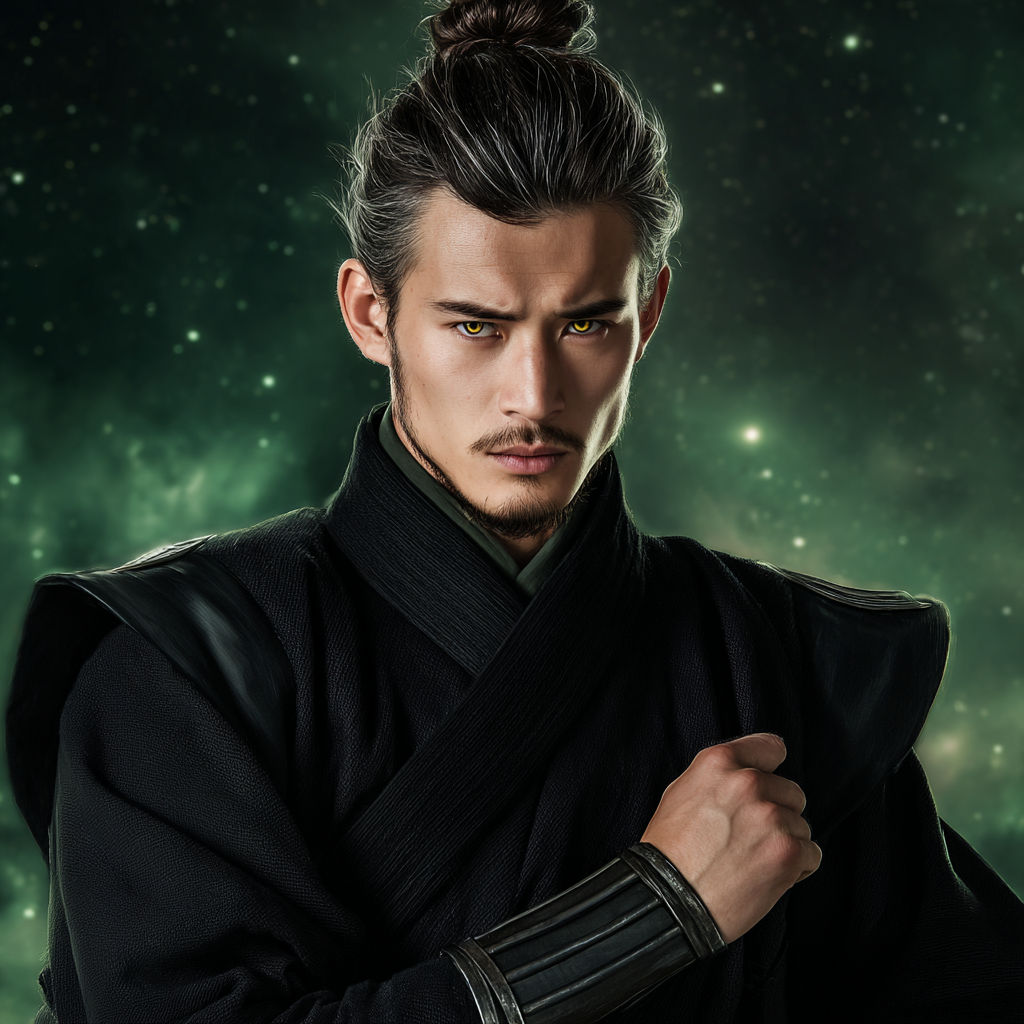
Psionic Blackcoats serve as judges, executioners, and advisors. Their authority derives from abilities most citizens will never possess. In combat, they favor the complementary disciplines of Void and Eclipse psionics—destruction and preservation wielded in equal measure. Their preferred weapons include traditional warstaffs, Psi Fans for spell amplification, and reinforced fist weapons for close-quarters work, alongside standard Blackcoat armaments when formation fighting is required.
Doctrine on Intimacy
Unlike celibate martial orders elsewhere in the Seven Realms, Blackcoats operate under a doctrine refined by generations of Prefects who understood that repression breeds weakness. Members are permitted to indulge animalistic desires, including sexual ones, as frequently as they wish. The sole restriction: such indulgences must occur exclusively through legally sponsored Leased Lilies. Senior Blackcoats receive officially sanctioned discount coupons.
Open to Outsiders
Despite their reputation as Xing Hong’s most ruthless institution, the Blackcoats maintain a remarkably open stance toward outsiders. All ethnicities are welcome to apply, and the order actively favors non-Imperial candidates for leadership positions—a policy designed to prevent any single faction from claiming undue influence over the city’s defenders.
The majority of current Psionic Blackcoats are immigrants: Valorans fleeing Covenant rigidity, Maridians seeking opportunity beyond Directorate borders, Novians escaping Alliance corporate exploitation, and countless others drawn by the promise that merit alone determines advancement. This inclusive philosophy serves practical ends as much as idealistic ones. Immigrants who sever ties to their homelands make ideal candidates for an order that demands the abandonment of all emotional bonds. Those who have already left everything behind find it easier to let go of what remains.
Leadership Pipeline
Nearly every Prefect and Seneschal in Xing Hong’s history served as a Blackcoat before ascending to administrative roles. Dilinur Altai rose through the psionic tier, her Eclipse abilities honed during years of service before she assumed the Prefect’s office. Kenji Tsudo climbed through standard ranks, his tactical acumen and unwavering discipline earning him the Seneschal position without a trace of psionic talent. Both were celebrated members before assuming their current positions.


Genbu
玄武
The Genbu is Xing Hong’s primary armored transport, a one-of-a-kind vehicle that has become as much a symbol of the city’s independence as the golden phoenix on its flag. Named after the Black Tortoise of Chinese and Japanese mythology, the vehicle earns its title through sheer stubbornness—it was built to survive, and twelve years later, it’s still rolling.
The design prioritizes protection over speed or elegance. Heavy black armor plating covers every surface, with gold trim tracing the edges in what engineers insist is “traditional aesthetic choice” rather than vanity. The interior accommodates a full Blackcoat squad plus additional personnel—up to nineteen people—with bench seating along both walls and weapon racks between them. A roof-mounted turret provides suppressive fire during hot extractions, while reinforced treads handle the Hellas Basin’s rocky terrain and Dragon District’s debris-choked streets with equal reliability.
Operational on almost any planet or moon in the Seven Realms, the Genbu’s origins are the subject of persistent rumor and official denial. Its hybrid design bears unmistakable resemblance to both Alliance Space Rover mobility systems and Imperium Draconic Engine armor configurations that Prefect Dilinur has always attributed to “convergent engineering principles.” Whatever its true lineage, the vehicle proved instrumental during the 2283 Independence War, breaking through Imperium blockades that should have crushed the fledgling city-state. Veterans of that conflict still speak of the Genbu with something approaching reverence.
Observant technicians note that the Genbu’s turret housing contains sealed compartments and dormant power conduits that connect to nothing. Maintenance logs from 2283 reference a “primary weapons integration system” that no longer appears in current schematics. When asked, Seneschal Kenji simply states that the Emerald Directorate provided certain technologies during the Independence War that were “returned as part of diplomatic agreements.” The empty housings remain—whether as a reminder of debts paid or capabilities surrendered, only the Prefect knows for certain.
Standard crew consists of a driver, a turret gunner, and whatever squad is being transported. The vehicle lacks the speed of Alliance rovers or the raw firepower of Imperial siege engines, but Blackcoats trust it to hold together when everything else falls apart. As Sergeant Haylen Shih reportedly tells new recruits: “He flies like a brick. But that brick gets you home.”


Maṇi Lamp
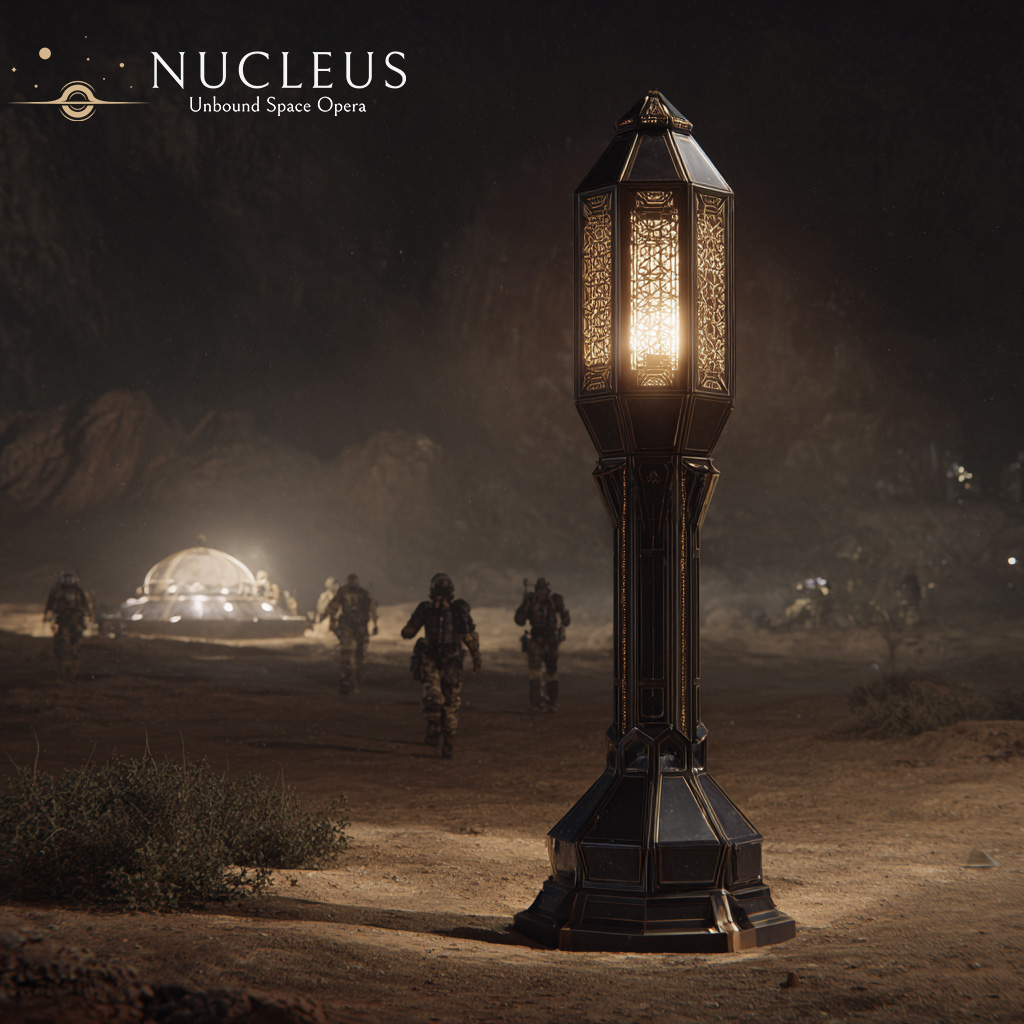
The Maṇi Lamp stands two meters tall in the volcanic dark: matte-black polymer, gold trim catching what little light reaches the frontier, a hexagonal head flaring outward like a lotus mid-bloom. The name comes from Sanskrit — maṇi, jewel — and honors the mantra Oṃ Maṇi Padme Hūṃ that Rakshasa settlers carried from Earth to Proxima Centauri aboard Bimba’s Forgiveness. When Xing Hong modular engineering met Rakshasa psionic biotechnology, something new emerged. Neither faction could have built this alone.
Behind the lattice panels, organic components hum with a low-frequency psionic field. The effect is simple and profound: it masks heat signatures, disrupts Aether resonance, and scrambles the chemical trails that make Bone Fiend packs so lethal in enclosed terrain. A proper ring of Maṇi Lamps renders a camp invisible to everything short of a Kraken’s full telepathic sweep. Silent. Lightless. Requiring no maintenance once placed. Blackcoat forward units started requisitioning them for tunnel deployments in 2294, and commanders have noted something that appears in no official documentation: people sleep differently when they know the darkness isn’t listening.
But the Lamp’s true potential remained hidden until frontier survivors began experimenting with what the human body could offer. The heat-sink ridges running the length of each pillar were designed for thermal regulation. They were not designed for what Rakshasa field operatives discovered they could accept.
Semen Added to Heat-Sink
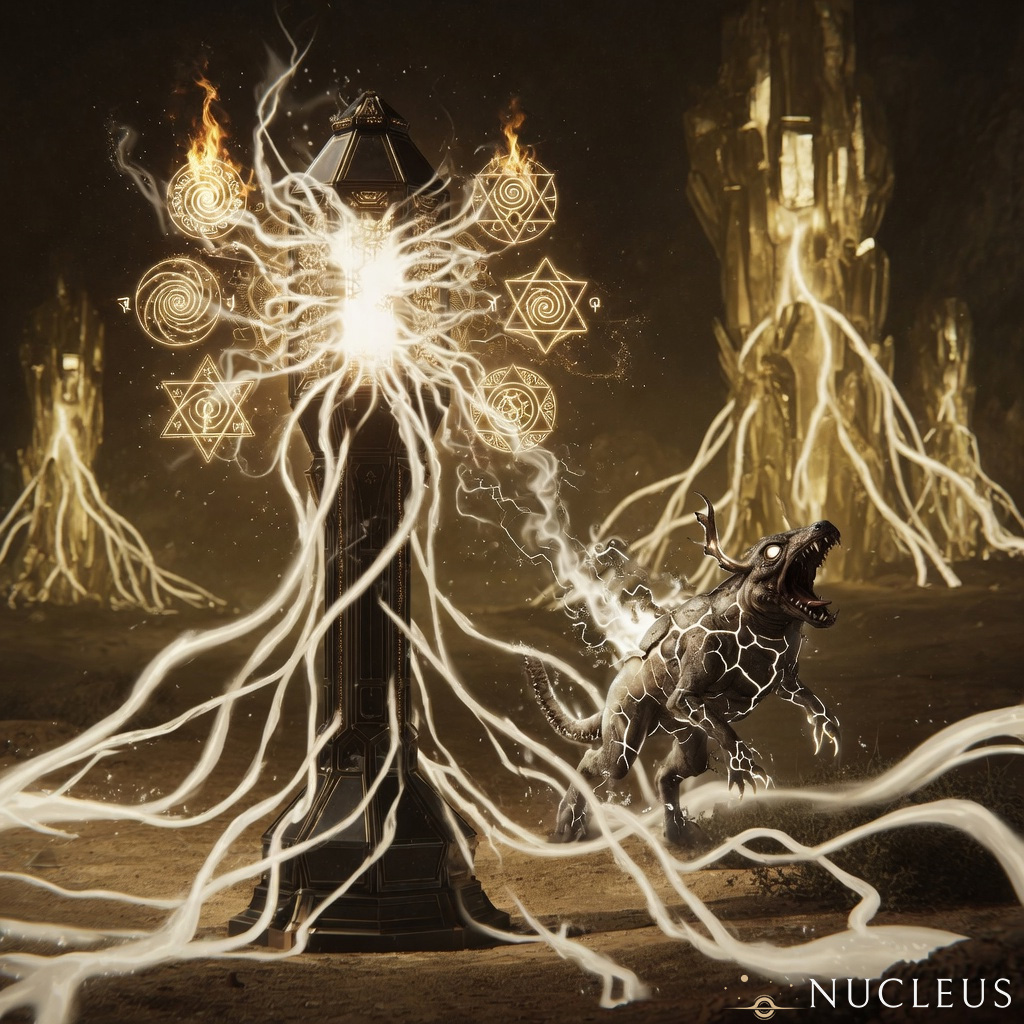
The organic components drink what’s given and rebroadcast it as a slow-release psionic irritant. Enemies crossing the threshold find their coordination unraveling — Aether disruption first, motor function second. Against Bone Fiend packs, the effect is devastating: their chemical signaling fractures before they can close distance, turning coordinated hunters into confused strays stumbling through ground that hates them.
One condition applies: the semen must come from a lover’s handjob. A man who ejaculates by his own hand produces seed laced with loneliness and the quiet shame of unmet need — Aether reads emotional state, and isolation carries no charge the Lamp can use. But semen drawn out by a woman’s touch, by her hands or mouth or body belonging to someone who wanted him there, carries a different signature entirely. That desire imprints. The Lamp knows the difference. A man’s seed, once meant only for making life, now unmakes those who threaten it — but this masculinity must be enabled by a lover’s touch.
Breast Milk Added to Heat-Sink
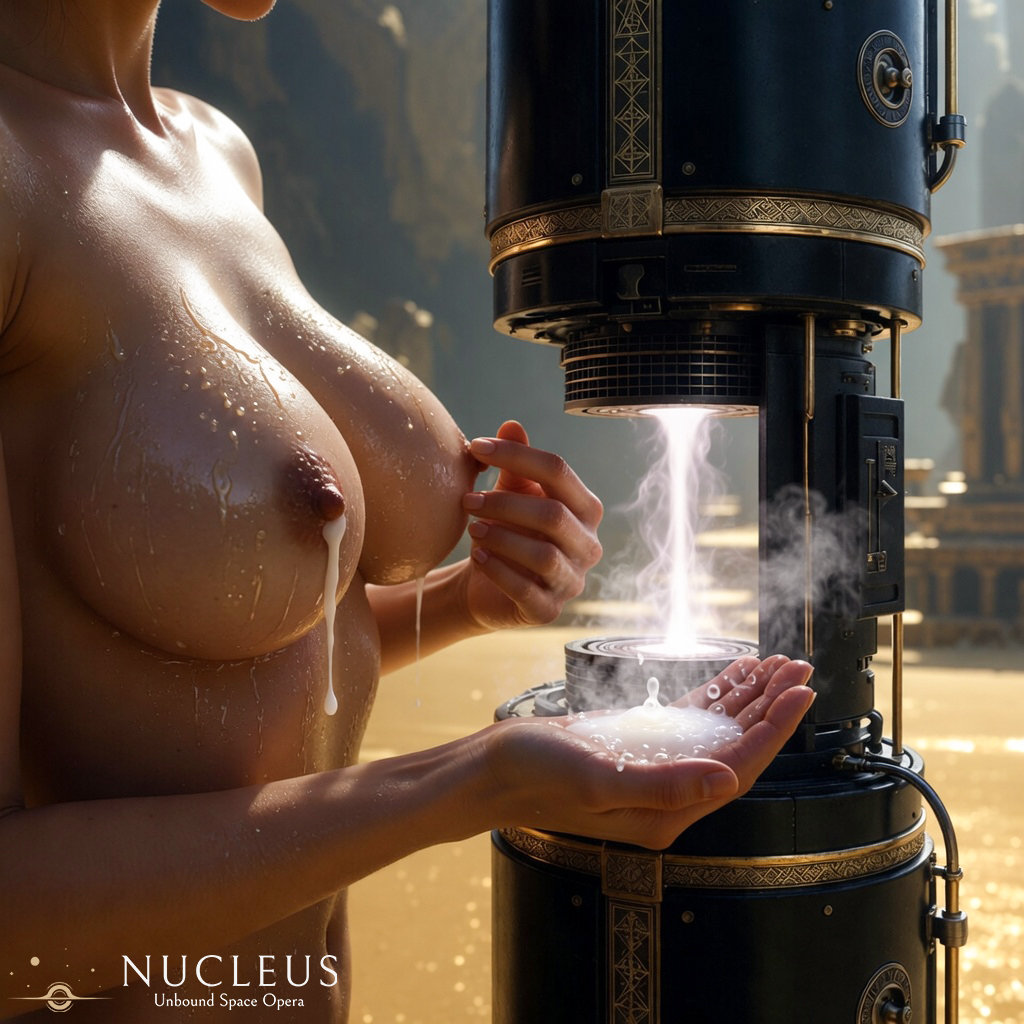
The Lamp absorbs the Aether-rich compounds and redistributes them as a diffuse restorative field. Wounds close faster. Aether regeneration steadies. Field medics working within an active ward’s radius report measurably better outcomes — not dramatic, but consistent enough that the difference becomes obvious across a full shift.
A secondary effect: the ward carries the contributing woman’s body scent. Whatever fragrance rises from her skin — sweat, soap, the particular warmth of her — disperses gently across the protected area. Soldiers have described it as sleeping in a space that feels watched over. The perimeter smells like the woman, like someone who cares whether they survive the night. What once fed infants now sustains soldiers. What flowed from a mother figure’s body now holds a perimeter against the dark.
Each Maṇi Lamp accepts one upgrade only. Choose before deployment.
The implications take time to settle. For centuries, humanity treated its sexual fluids as private matters — reproduction, pleasure, occasionally medicine. The Nucleus Era demanded more. Out here on the frontier, where Fenris Radi-Mons hunt by heat and Aether and scent, the compounds a man produces after climax and the milk a woman’s body makes without pregnancy have become tactical resources. Not shameful. Not hidden. Weapons.
Because survival doesn’t care about old taboos. It only knows that what the human body offers, given with purpose, can hold the line when nothing else will.
Seed Dumu
精度母
“Make War as you would Make Love.”
(汝當行戰如行愛。)
— The Decree of Seed Dumu, origin unknown
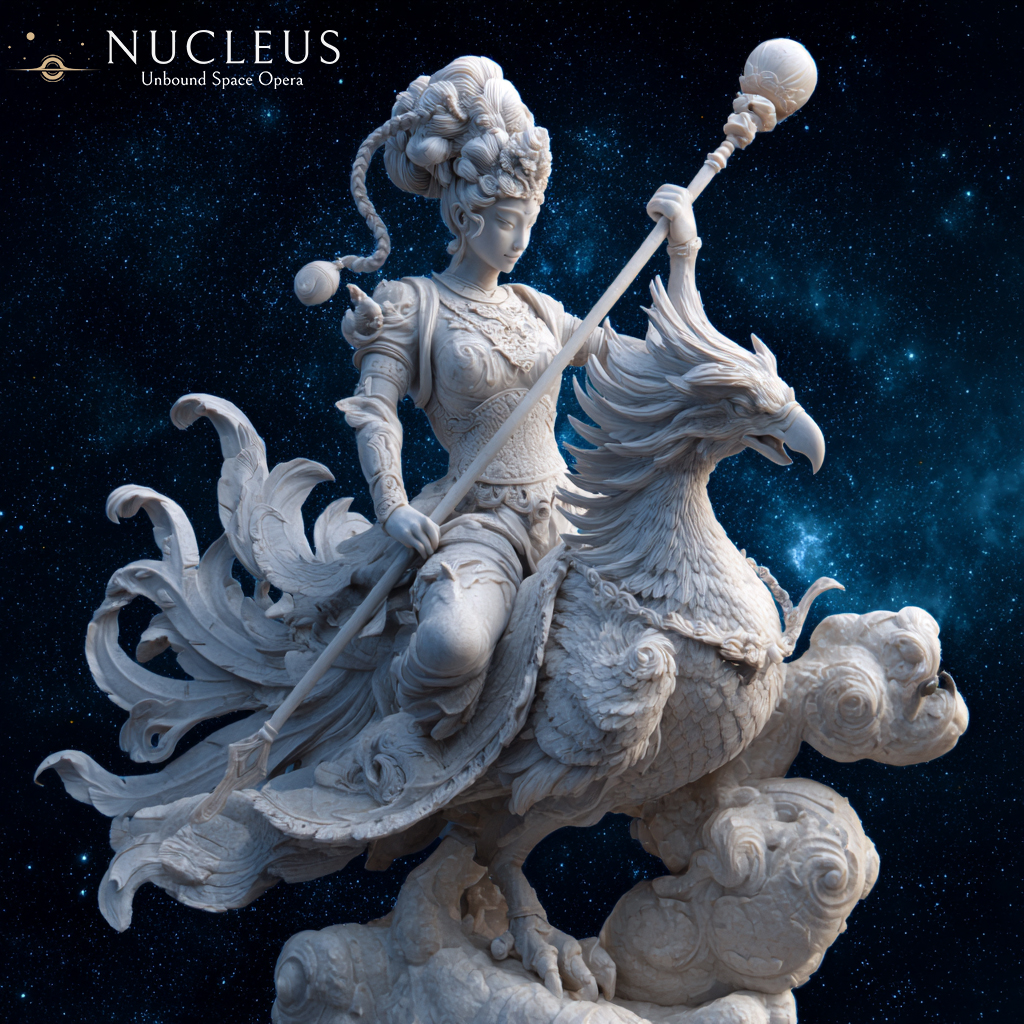
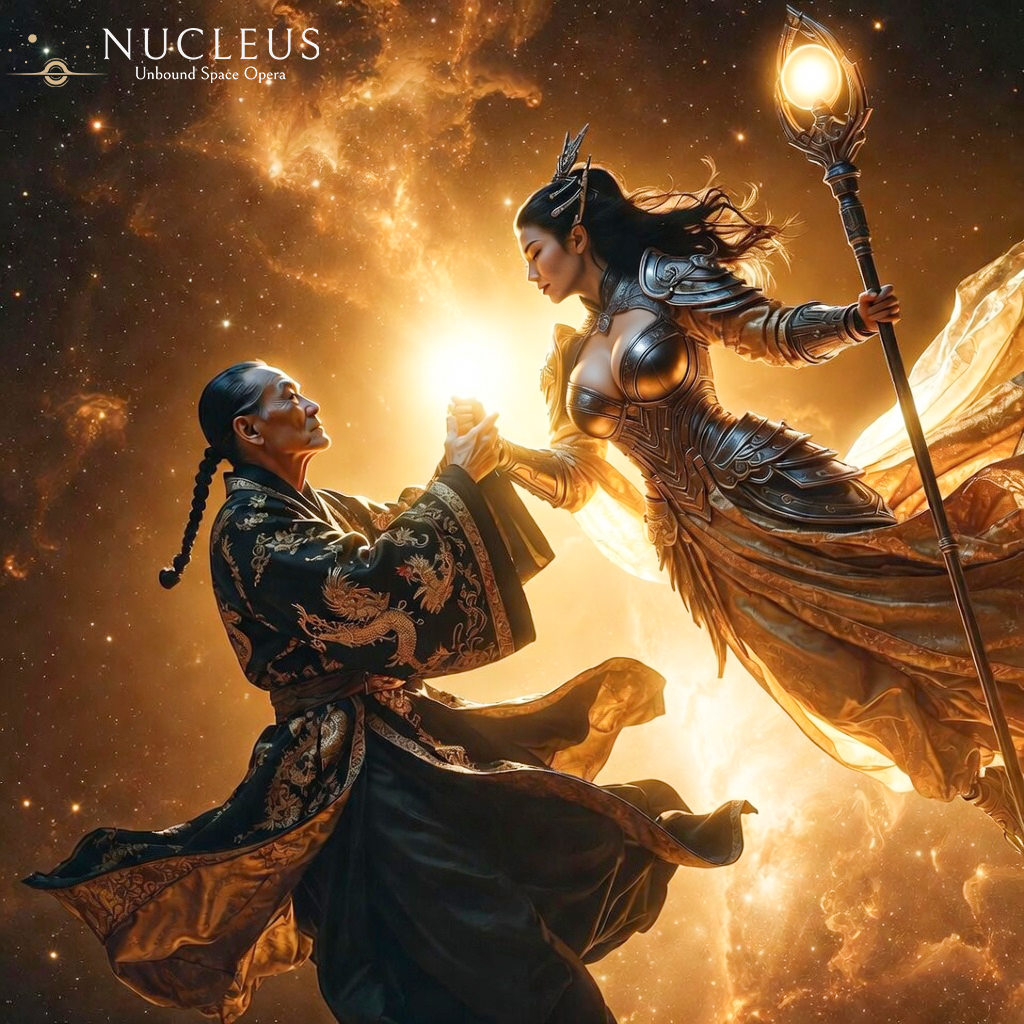
Goddess of sex, love, and war. Chinese in origin, now worshipped across the Seven Realms by a small but devoted following that cuts across every faction line. Her name carries duality: 精 means both “essence” and “semen,” while 度母 invokes the maternal divines of East Asian tradition. She is the mother who guides through passion, devotion, and bloodshed alike. Most of humanity has forgotten her. The ones who remember tend to be dangerous.
Origin
Seed Dumu emerged during the collapse of Communist China, representing everything the regime had suppressed: individual desire, physical intimacy, the courage to fight for something personal rather than ideological. Her worship spread through folk religion in the post-war era, carried by refugee communities, merchant fleets, and soldiers who needed something to pray to before a battle or a bed. Over two centuries, she outgrew her Chinese roots. Shrines appeared on Mars, Venus, Uranus moons, and eventually Proxima Centauri — not through organized mission work, but through the quiet persistence of people who kept carving her likeness wherever they settled.
The Decline
In the 23rd century, Seed Dumu’s worship has largely vanished from the middle class. Her three domains have been stripped of sanctity by modern life. Sex is accessible and transactional — female college students graduate or drop out into Leased Lily work every year, and Medi-Vap eliminated the consequences that once made intimacy feel like a serious act. War is a resource game played between politicians and megacorps, nothing personal enough to pray over. Love is seen as an invented concept used to justify economic leverage — marriage for tax breaks, partnerships for combined income, rituals dressed up as romance.
A goddess who presides over all three has little to offer people who’ve reduced them to systems. Seed Dumu is now considered a luxury religion — maintained by those with enough power to understand what she actually represents, or enough wildness to still live it.
The Xing Hong Shrine
Her greatest temple stands within the Honghuang Administrative Palace, housing a five-story statue allegedly carved from the crystallized semen of the 108 men who founded Xing Hong. The statue’s white-gold composition has never been satisfactorily explained. Devotees believe Seed Dumu blessed the city’s Independence War in 2283. Whether or not this is true, Xing Hong won its sovereignty against odds that no strategic analysis can fully account for.
Prefects and their inner circles take her worship seriously. For Xing Hong’s governing class, Seed Dumu is not superstition — she is statecraft. The city was built on sex work, defended through war, and held together by bonds of loyalty that outlast contracts. She is the patron saint of all three.
Worship
Devotees seek her blessing through divination blocks (擲筊). Her responses are famously unpredictable — she has refused powerful officials while favoring apparent outsiders. Couples intending to marry in Xing Hong traditionally visit her shrine to let Seed Dumu see them together before they commit.
Curiously, Seed Dumu worship is widespread among Wild Fangs, including those in Proxima Centauri who have no connection to Chinese culture or Xing Hong’s traditions. Many carry small phoenix totems on their person. Some take divination seriously enough to carve white wooden blocks from local tree trunks, tossing them on flat rocks before deciding whether to accept a contract or choose a mate. No one has adequately explained why a Chinese folk goddess resonates with frontier hunters across multiple star systems. Wild Fangs don’t explain it either. They just do it.
Factional Attitudes
The Imperium classifies Seed Dumu as a “lesser divine second to the Celestial Dragon” — not persecuted, merely patronized. Her followers in Imperial territory worship quietly and without state support. The Zorian Covenant actively discourages but does not forbid her worship. The Alliance and Directorate are indifferent. Most of their citizens have never heard of her.
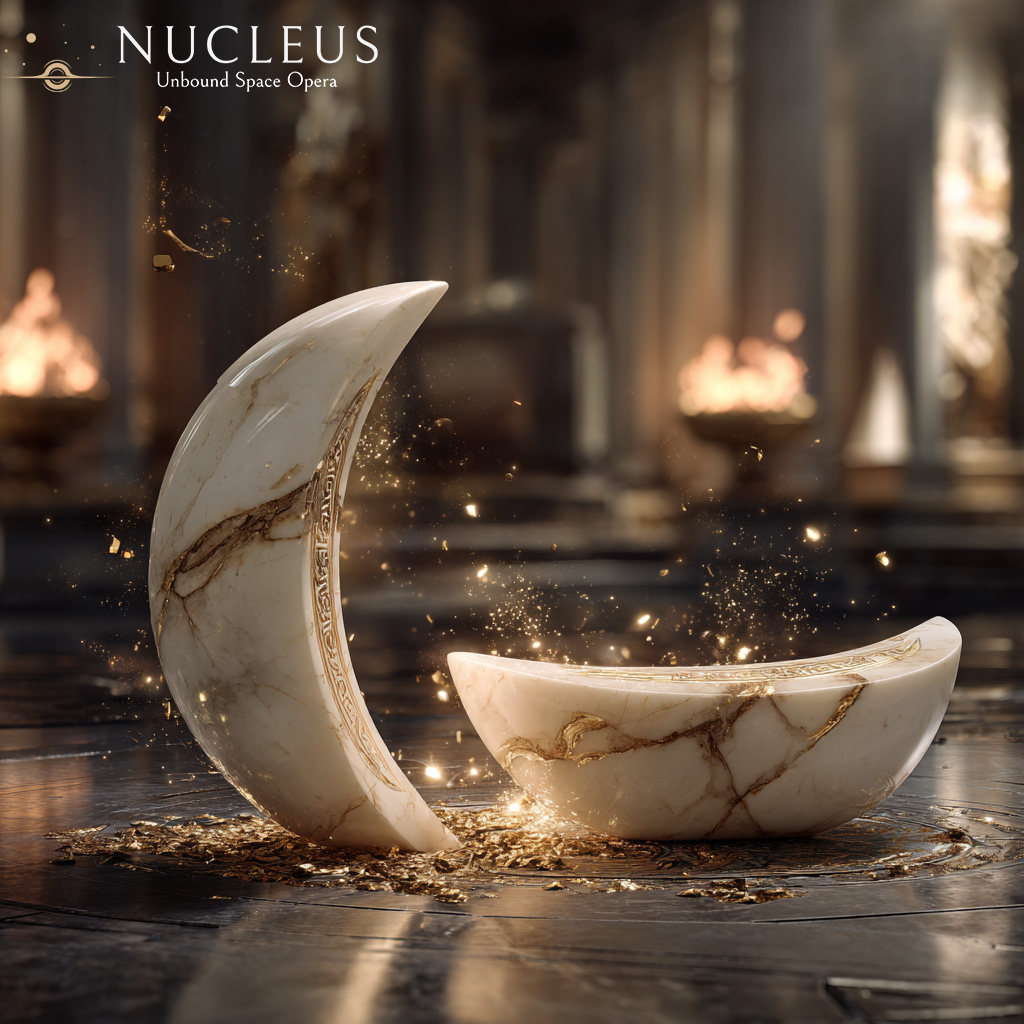
After that, her silence is its own answer.
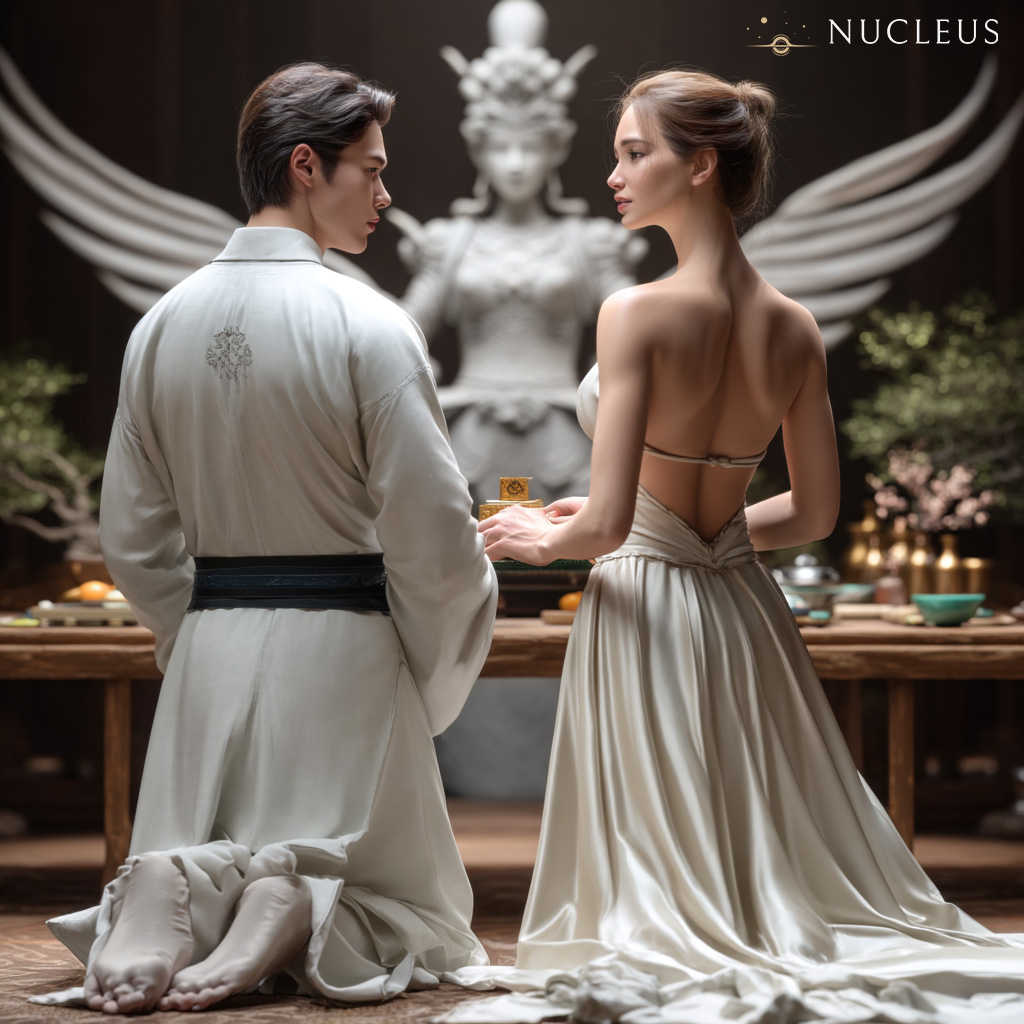
The woman holds the divination blocks and ask 3 questions to help decide whether to proceed with the marriage; the questions she will ask are between herself and the goddess.
Vinh Tra Gong
榮茶公
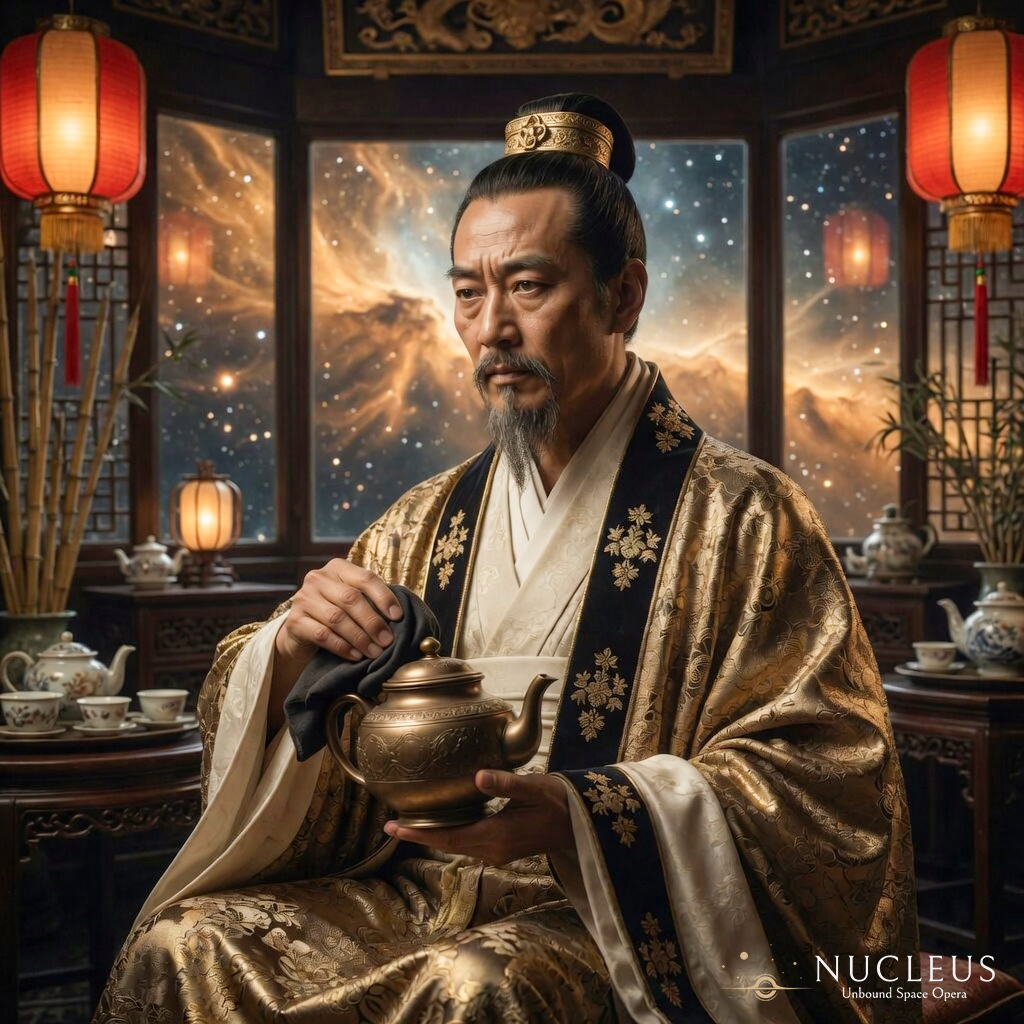
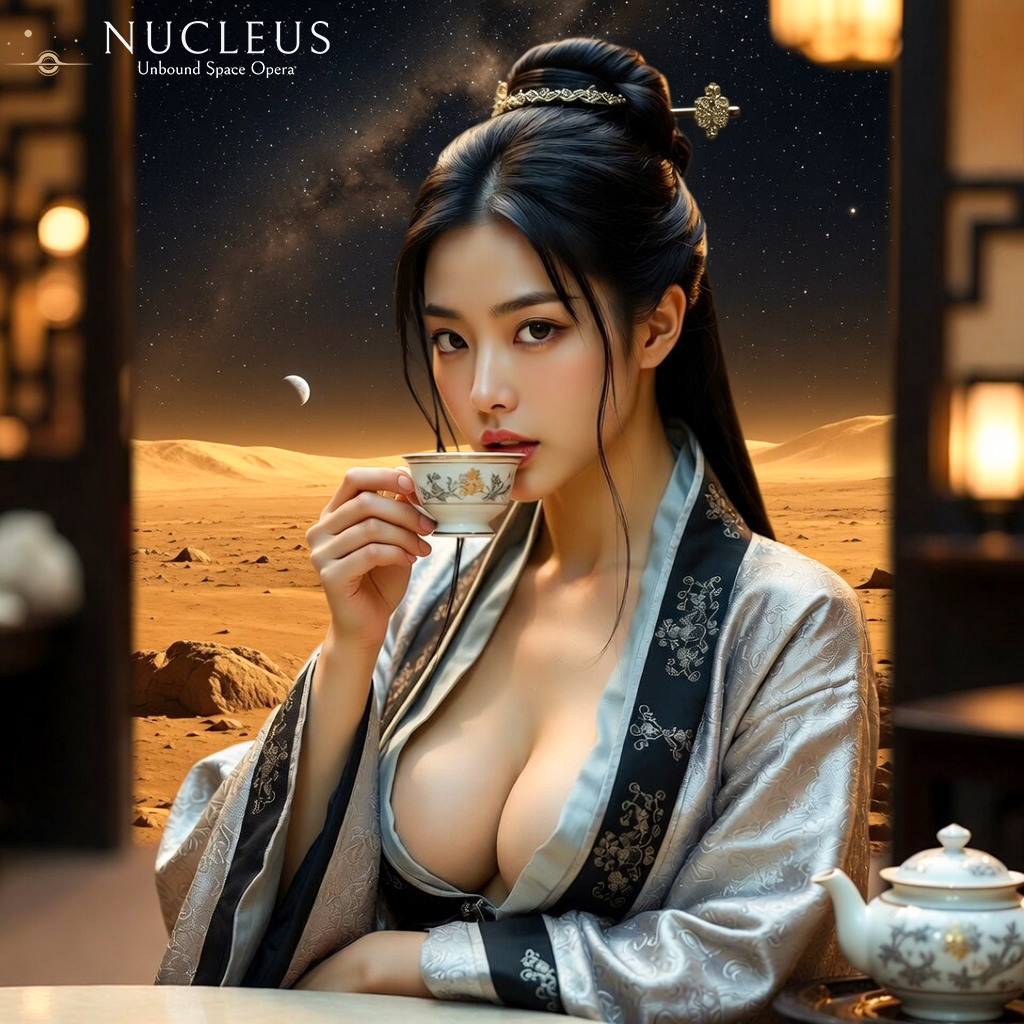
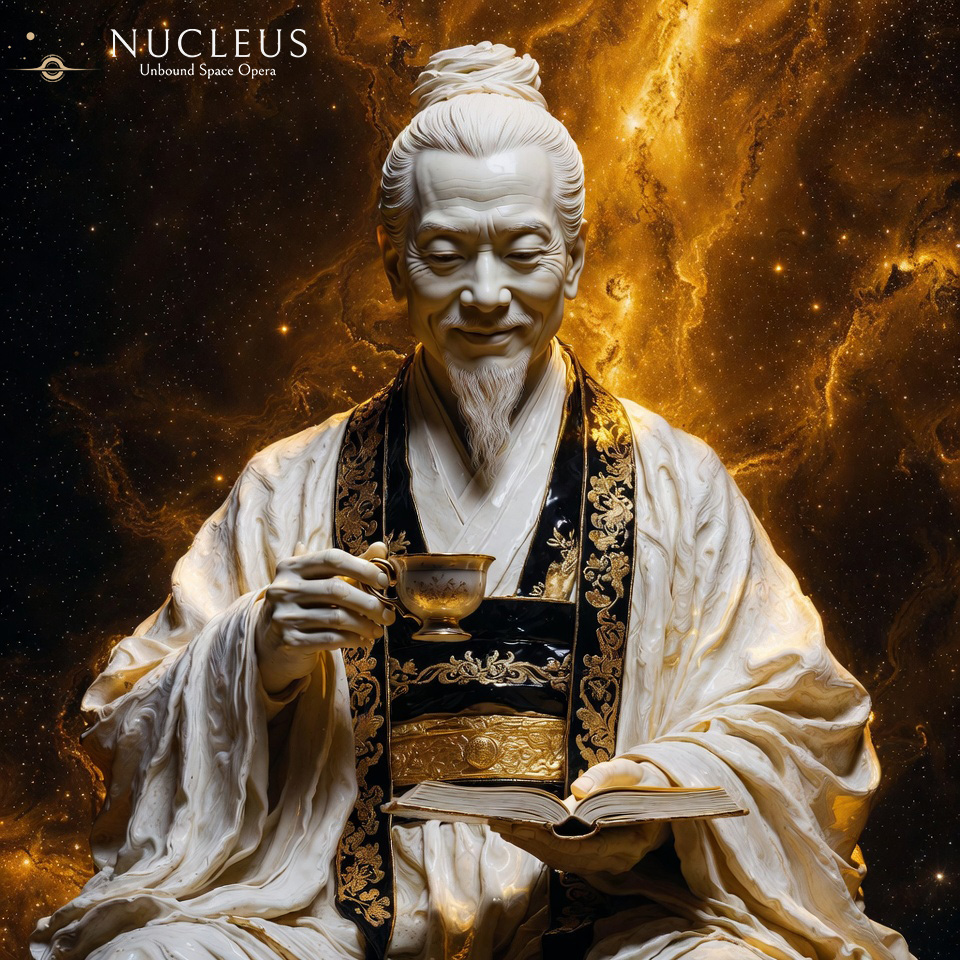
Lord of Flourishing Tea. Patron of men who show up, stay present, and do the work. Nobody disputes that a man named Vinh Tra ran a teahouse in Dragon District starting in 2093. The oldest surviving Her Tea Service pot, dated 2097, carries his inscription on the lid. Whether the rest is history or hagiography remains a matter of honest debate.
The Legend
The story begins with an unremarkable Vietnamese-Chinese man in his fifties. Bereaved, recently arrived, unhappy. His teahouse ran eleven in the morning to eleven at night. His private hobby was collecting pornography and old Earth sexual cultivation texts. No wife, no family, no ambitions beyond keeping the doors open.
A woman named Du began visiting on the second Tuesday of 2095. Always at 22:22. Always ordering hot black bean tea. Always in Booth 2.
Tra was too shy to speak to her at first. When he finally asked about the black bean tea on her fifth visit, she said she liked his beans and his tea. On her twenty-second visit, she found his cultivation tomes while he was brewing. He braced for disgust. She asked if he wanted to practice.
They did. Every Tuesday thereafter — tea first, then talk, then sex.
The Discovery
Around the thirty-seventh visit, they began writing down what they discovered. That withholding ejaculation harms the body. That Aether flows through sweat and release rather than restraint. That the body’s generosity is medicine. Scholars tracing the Principium’s origins point to these undated notebooks as its earliest empirical foundation.
On the forty-ninth visit, Du fell ill. Tra walked her home and stayed five days. The Tuesday ritual moved to her house after that — he brought his tea equipment, she supplied the space.
On their fifty-fifth date, Tra proposed. Du said she found marriage a poor container for what they already had. Their erotic and romantic connection needed no document. He accepted. Conversations lengthened past dawn. They slept in the same bed. They went out together between Tuesdays.
On their sixty-ninth date, Du lactated unprompted during sex. Tra suckled her breasts and drank her milk in bliss. She let him.
The 108th Date
Their one hundred and eighth date was the last. Du announced she was leaving Xing Hong. Tra asked for something to remember her by.
She bathed, filled his teapot with the bathwater, and set it on the table. He brewed the black bean tea with it. Then, in a reversal neither had planned, she moaned in bliss as he milked her — hands on her breasts, guiding her lactation into the pot. They drank together.
Tra inscribed the lid before falling asleep against Du’s bosom. He did not wake in the mortal world.
The ritual they performed that night — bathwater in the teapot, black bean tea brewed over it, lactation into the pot and shared — became the Her Tea Service.
Seed Dumu had been wandering the six mortal realms looking for a soulmate.
She had been Du all along. She brought him home: to her turf within the Yinmu—the Seventh Realm of the Cosmos, a plane of dreams and desires.
And so the Thousand Gods spoke, welcoming Tra—who was made Ving Tra Gong, Lord of Flourishing Tea and Divine of Patience, Diligence and Devotion. Together with Seed Dumu, he oversees the small people working hard, living with purpose and persevering across the Seven Realms.
Domains
Patience: Showing up every Tuesday. Brewing the tea properly every time. Waiting until the fifth visit to speak. Waiting until the twenty-second to be found out. Consistent, undramatic presence.
Diligence: The early hours, the disciplined study, the meticulous craft. Tra’s transformation after meeting Du is cited as the model for men who want to become worthy of what they desire.
Devotion: The quiet, specific care of someone who stays five days when the other person is sick, then carries his tea equipment to her home every week thereafter. Attention sustained across years.
Historical Record
The teapot Tra inscribed that final night is displayed in Phoenix District’s Museum of Xing Hong Origins. Carbon dating confirms the ceramic to late 21st century. The inscription matches his handwriting in the surviving notebooks.
Numerous early Nucleus Cultivation texts bear the author name Vinh Tra. Each one opens the same way:
“To my eternal love, Lady Du.”
Her Tea Service
汝茶禮 (Rǔ Chá Lǐ)
“The man’s tea asks. The woman’s body answers. Together we brew what neither could make alone.”
— Inscription by Vinh Tra on the oldest known Her Tea Service pot, circa 2097
The name carries a deliberate ambiguity. In spoken Xing Hong dialect, 汝 and 乳 are indistinguishable — rǔ meaning both “thou” (classical, reverent) and “breast” (intimate, bodily). Both meanings are intended. When a man initiates this rite, he declares his desire serious enough to be judged by Seed Dumu herself, and serious enough to surrender every alternative.
Popular among Blackcoats and adventurous locals, this rite emerged from Seed Dumu and Vinh Tra devotee circles during Xing Hong’s founding years, when British tea merchants and Chinese settlers found themselves building a city together in the Martian dust. What developed was a fusion of courtship formality and ceremonial philosophy: the measured patience of a properly brewed pot fused with the sacred fluids from a woman’s body. In a city where sex can be purchased in any district, this ritual asks something money cannot buy: the willingness to belong to one person, flesh and soul.
Requirements
The Three Phases
She decides alone. If willing, she bathes that night in hot water — enough to open every her pore. She stays until she sweats fully, until the water carries her salt and her scent and the particular mineral trace of her body’s essence. Then she bottles the bathwater, fills the teapot to the brim, seals it carefully, and returns it with her chosen time written on the lid.
An empty teapot returned means no. No explanation required. No shame attached. The ritual cannot proceed without her complete willingness, and Seed Dumu does not bless coerced devotion.
Afterward, they retire to the private booth. The man sets out the implements: the pot containing her bathwater, the black bean leaves, the boba pearls, the cups. She watches. He brews.
The water that touched every inch of her skin now steeps with the tea leaves. The steam carries her scent into the air between them. He measures, pours, waits, pours again — following the traditional method precisely, never rushing. The ritual asks one question: can he be patient? Can he attend to something with the care it deserves, without demanding faster results? She watches his hands. She watches his face. She decides whether those hands will touch her.
He undresses her. Layer by layer, fastening by fastening, until she sits naked before him. His hands find her breasts — grasping, kneading, attending in a quickening fashion. His fingers trace circles around her nipples with the same unhurried patience he showed the tea. His palms support the weight of her. His thumbs brush across the peaks until they stiffen, signaling readiness.
If his desire is genuine, her body responds. The Milk Gates open. She begins to lactate, droplets beading at her nipples, then flowing more freely as he continues the ministrations. He guides the increasingly passionate streams into the teapot, her milk mingling with the tea already brewed from her bathwater. The liquid transforms: brighter, richer, carrying both her sweat and her sweetness.
When the pot is full, or when the woman’s body can be milked no further, he cleans and redresses her before they sit together. She rests while he pours for her — the Oath Gate engaging as she drinks what his hands drew from her body. He then pours for himself — the Feast Gate engaging as he swallows what she has given. They finish the pot between them that evening, the Aether binding them as they drink from the same pot.
The man permanently acquires one spell the woman knows — her Aether signature imprinting onto his through the shared consumption of her milk and bathwater. Which spell transfers cannot be controlled; it emerges from whatever resonates most strongly between them.
More significantly, his consciousness becomes psionically and sexually attuned to her. The binding is absolute. Falling in love with another woman becomes functionally impossible. For his heart has been poured into her pot and drunk back transformed. He may still feel attraction, still appreciate beauty, still form friendships. But the deep romantic devotion now flows only to her.
Cultural Status
In a post-modern society saturated with prostitutes, where physical intimacy can be purchased for an evening’s wages, the Her Tea Service represents the most radical loyalty a man can offer. He is not merely promising fidelity — he is surrendering his capacity for alternatives. The binding is not enforced by law or social pressure. It is written into his Aether itself.
Given how popular the ritual has become among Xing Hong’s devoted couples, black bean boba tea has evolved into a romantic signal all on its own. When a man orders this specific tea for a woman after dinner in a teahouse, every Xing Hong resident understands what he’s asking. Some women accept the cup and drink. Some politely decline. Either answer is respected. The question itself is the honor.
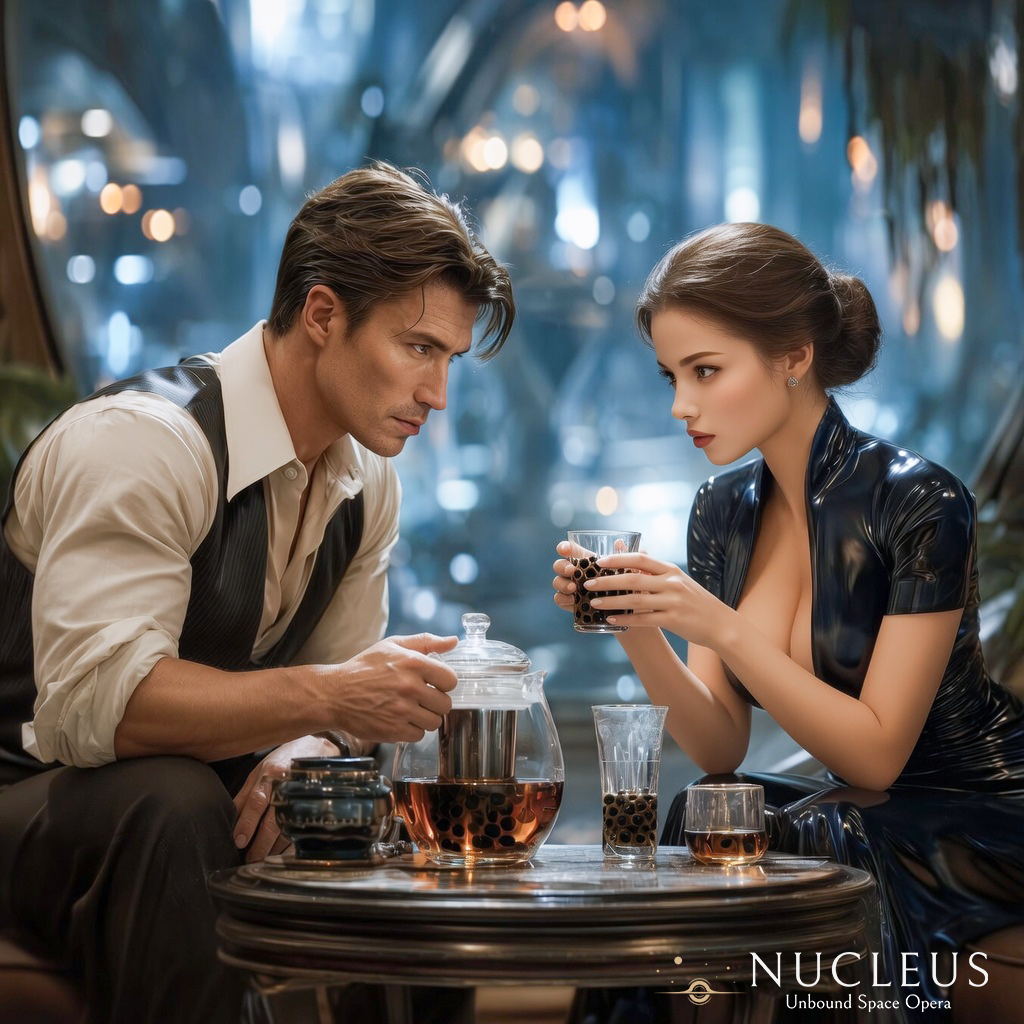
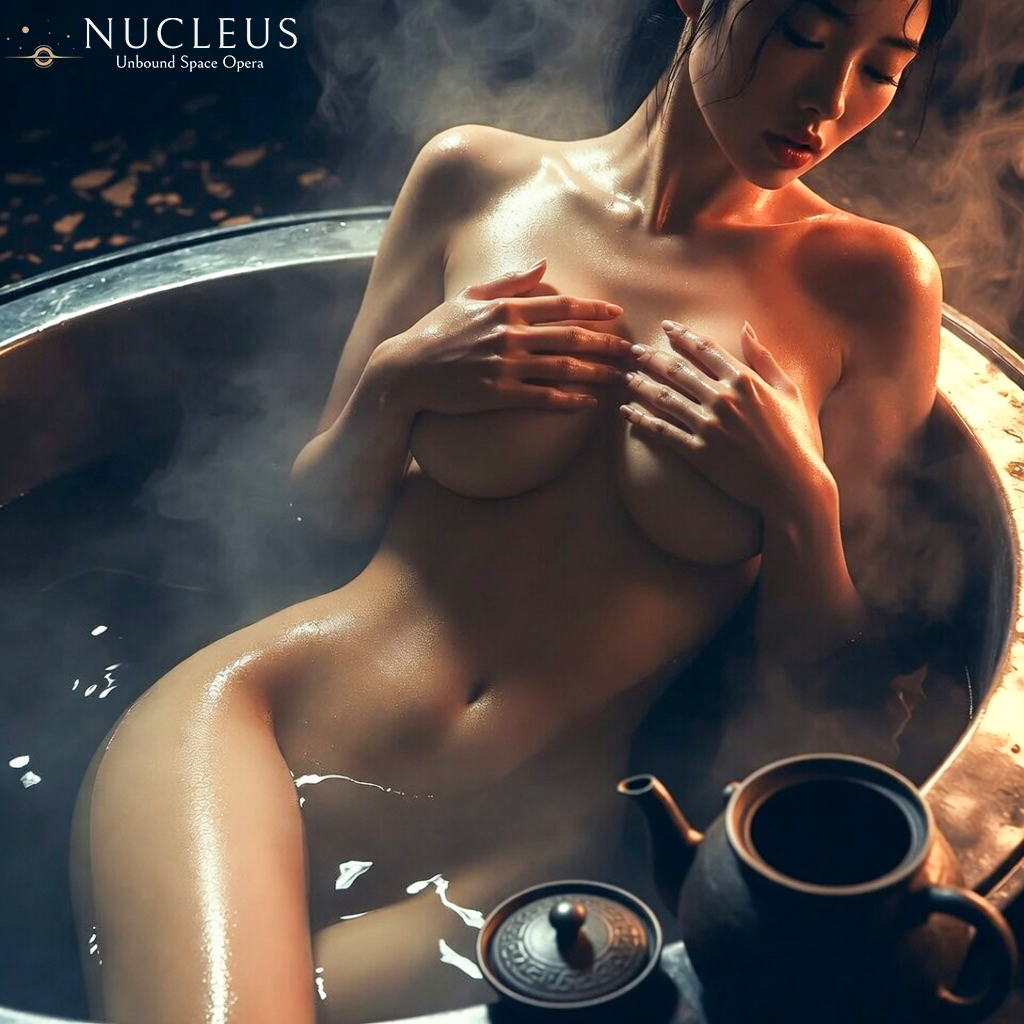
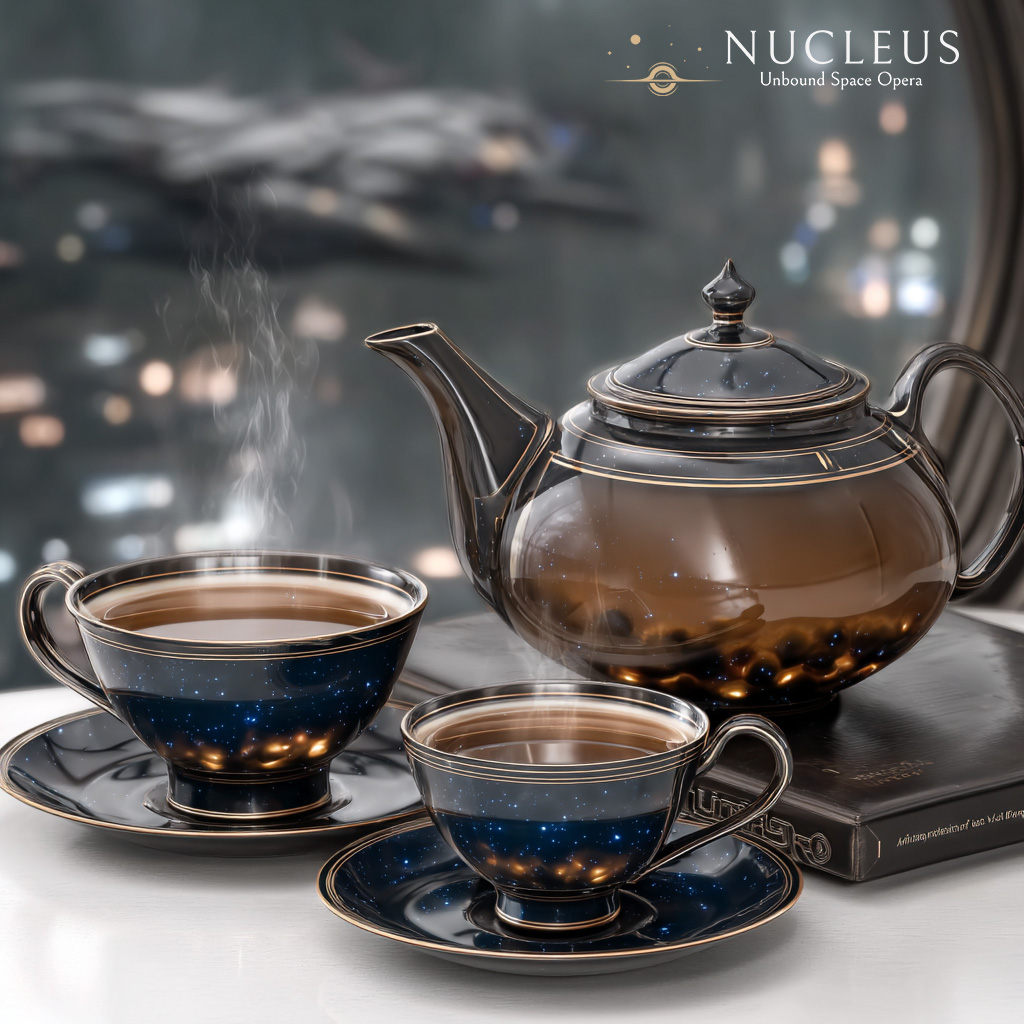
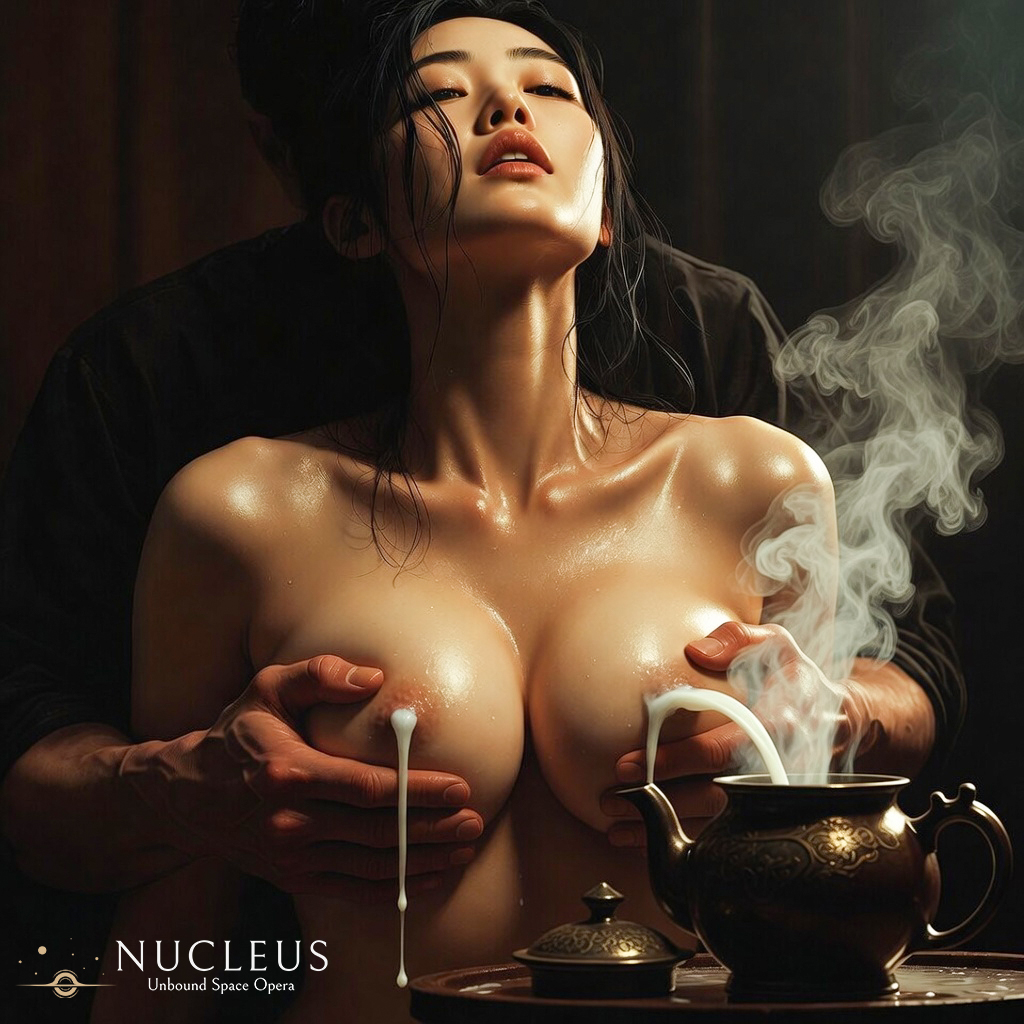
To ensure that Her Tea Service works, it is essential she feels safe and at ease with him, as she’s surrendering control of her body in total trust.
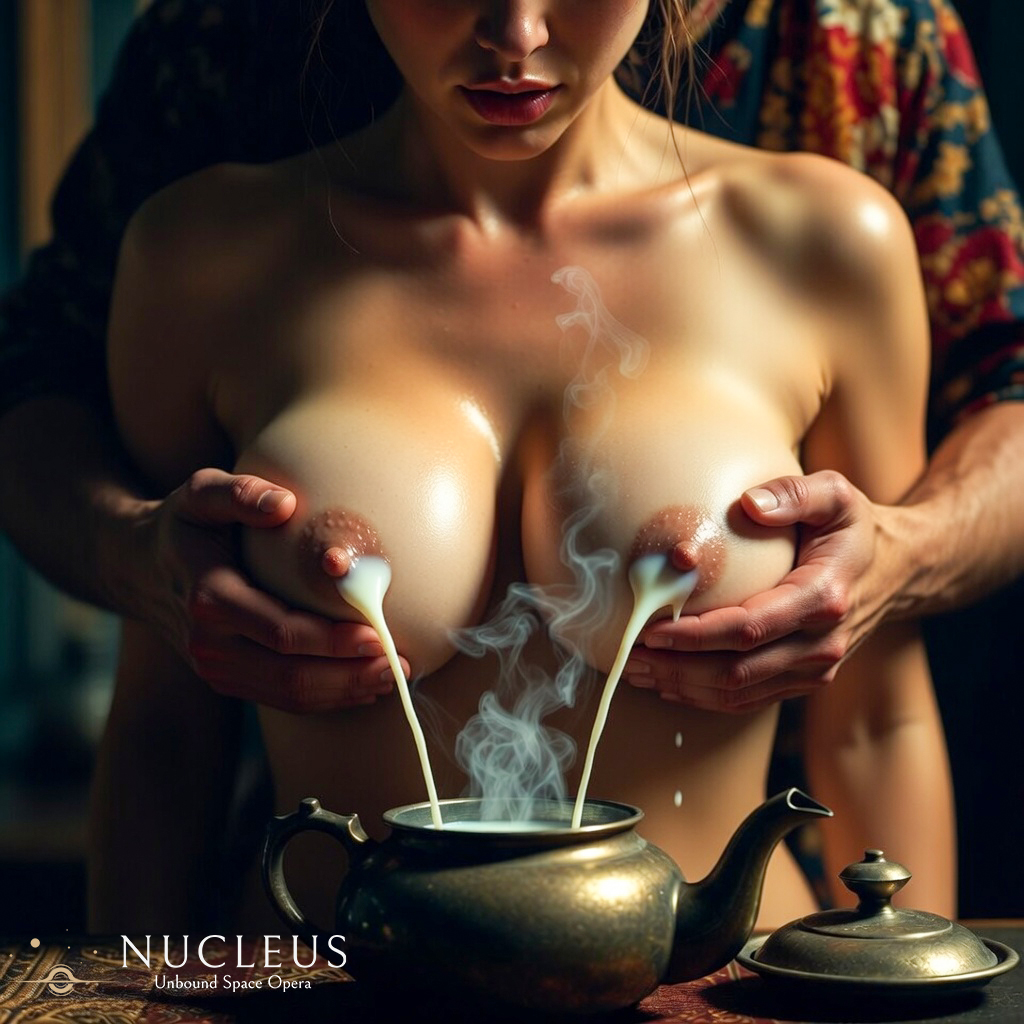
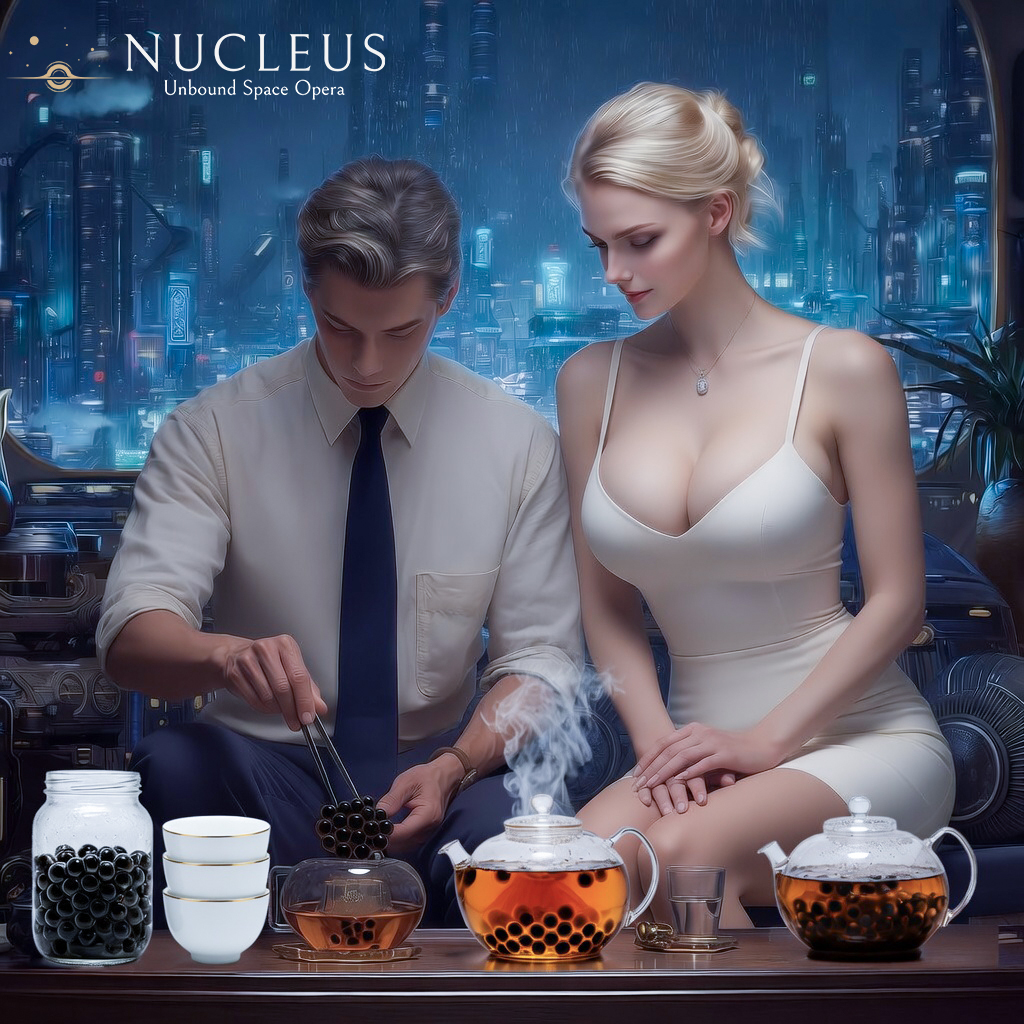
Some couples are already regular sex partners and view the practice as a passionate venture, one that may deepen their bond.
// XING HONG MUNICIPAL REGISTRY — PUBLIC ACCESS DOCUMENT
STRATEGIC ASSESSMENT: 煋妅
Fiscal Year 2295 • Mars, Hellas Basin
▸ CORE METRICS CLICK TO TOGGLE
▸ MILITARY READINESS CLICK TO TOGGLE
Law enforcement splits between Constables for street-level peacekeeping and Blackcoats for heavy response. Both forces recruit across all factions, requiring members to suspend external allegiance during service. The result is a security apparatus loyal to Xing Hong itself rather than any outside power.
▸ ECONOMIC INDICATORS CLICK TO TOGGLE
The Prefect’s philosophy is simple: keep rent low, keep food cheap, keep people alive. Infrastructure runs at minimum compliance. High-value bounties draw hunters willing to scout the Radi-Mon tunnels below — disposable reconnaissance that also controls the city’s surplus population.
▸ CULTIVATION INFRASTRUCTURE CLICK TO TOGGLE
Xing Hong’s economy runs on what other cities pretend doesn’t exist. Leased Lily work is legal, regulated, and economically significant. Sexual cultivation techniques are neither forbidden nor officially sanctioned — the city simply doesn’t ask what consenting adults do to restore their Aether. This pragmatism draws practitioners from across the Seven Realms who find moral regulation elsewhere suffocating.
▸ DISTRICT COMPARISON CLICK TO TOGGLE
Each district reflects the faction that holds influence there. The balance is deliberate — any power attempting to claim the whole city triggers immediate coalition from the other three. Dragon District’s vacant Deputy seat forces Prefect Dilinur to manage it directly, a burden the Imperium imposed by simply refusing to participate.
| DISTRICT | FACTION | DEPUTY | SECURITY | RENT |
|---|---|---|---|---|
| Eagle | ALLIANCE | Active | High | $$$$$ |
| Dragon | IMPERIUM | Vacant | Low | $$ |
| Lion | DIRECTORATE | Active | Medium | $$$ |
| Opera | COVENANT | Active | High | $$$$ |
| Phoenix | NEUTRAL | Prefect Direct | Medium | $$$ |
| Slum | NONE | None | Minimal | $ |
▸ STRATEGIC ASSETS CLICK TO TOGGLE
What makes Xing Hong worth holding goes beyond its population or trade volume. Certain assets exist here that exist nowhere else on Mars — infrastructure that predates human settlement, technology that emerged from the Independence War, and sacred sites that draw power from the city’s unique spiritual geography.
// END DOCUMENT — REGISTRY UPDATED 2295.03.15
“Where all streams run dry, a single spring becomes sacred. Where all hearts close, two that remain open become a temple unto themselves.”
— Lotus Sutra, Martian Recension
Xing Hong Heroes

Kenji Tsudo
津戸憲司
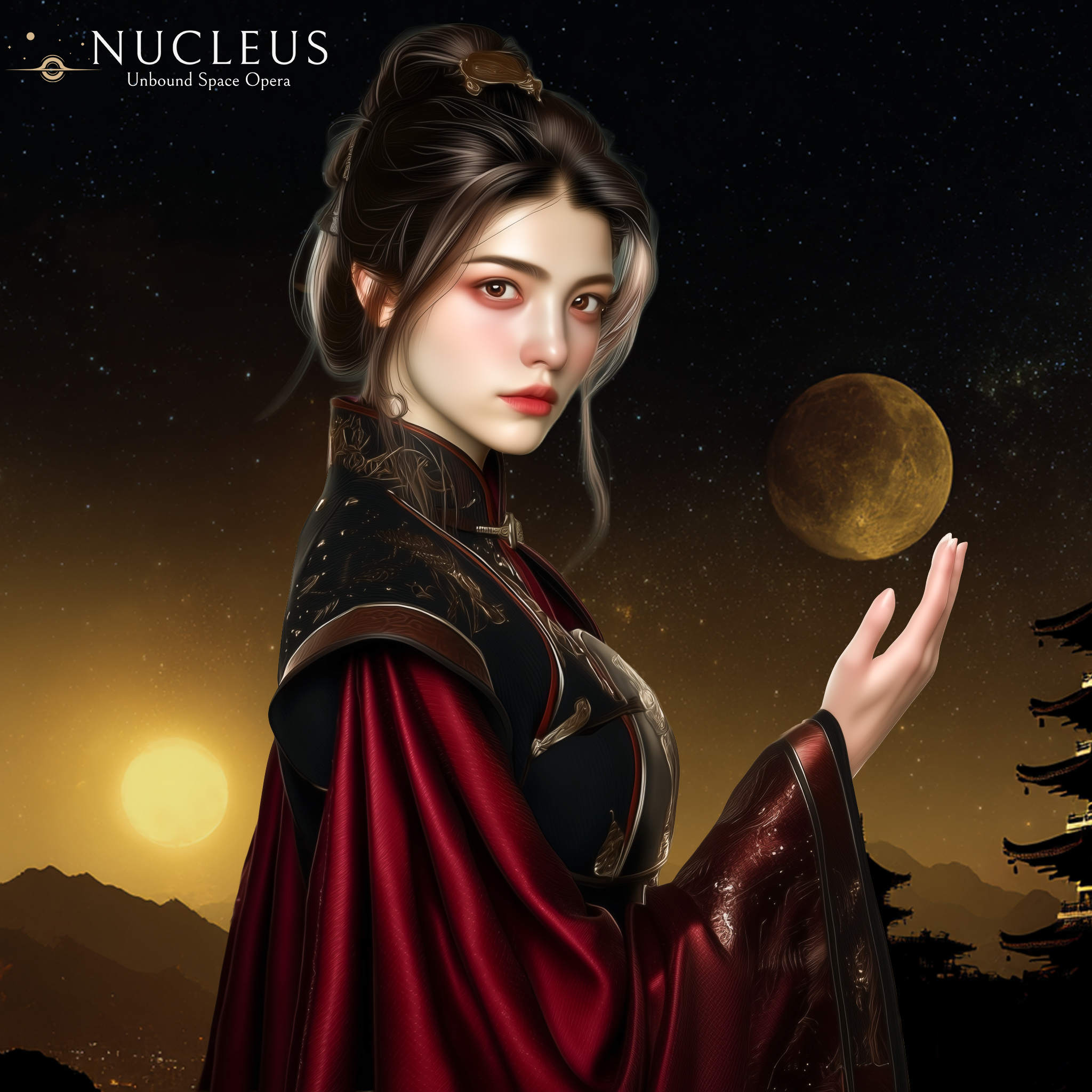
Dilinur Altai
狄麗努兒
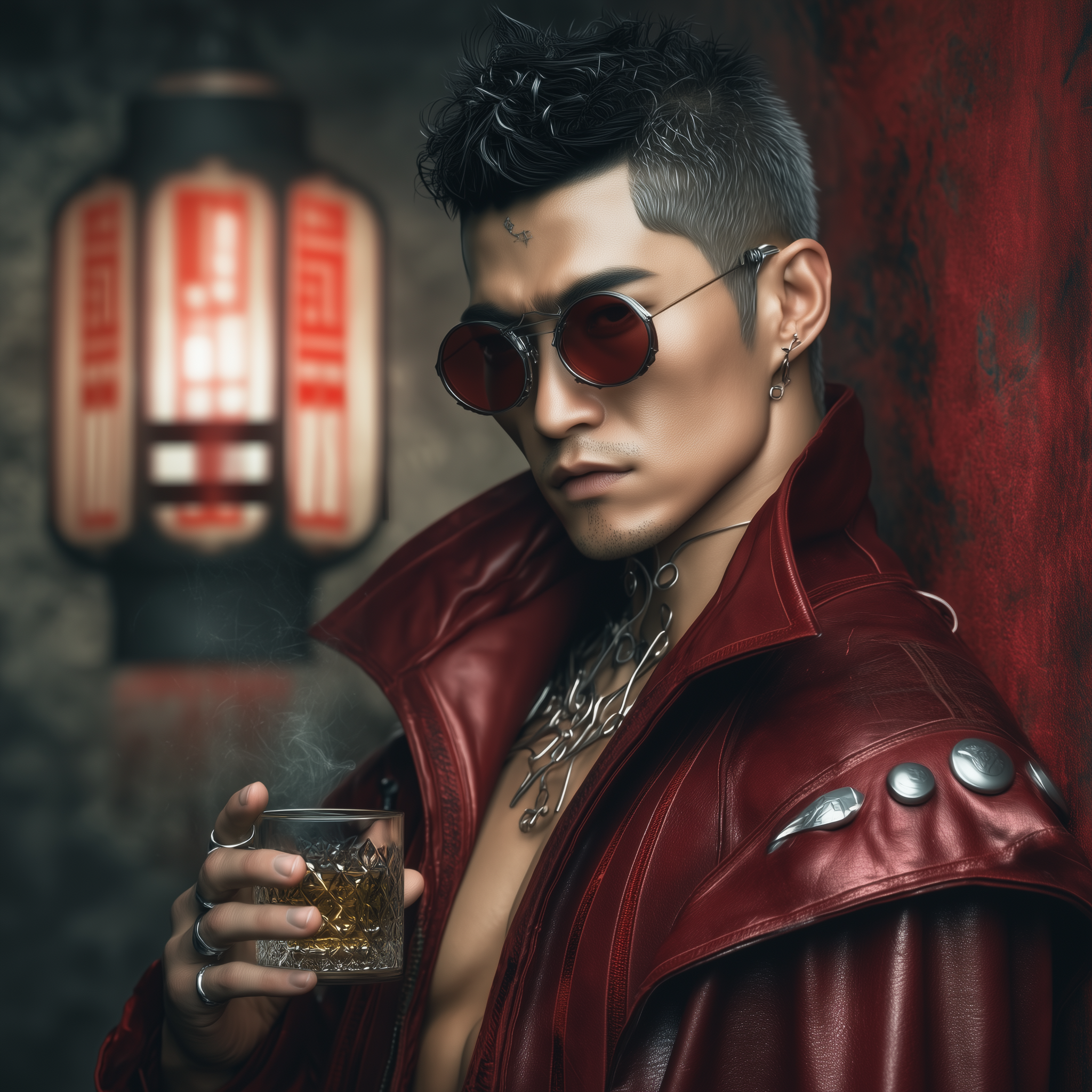
Iron Roach
鐵蜚蠊
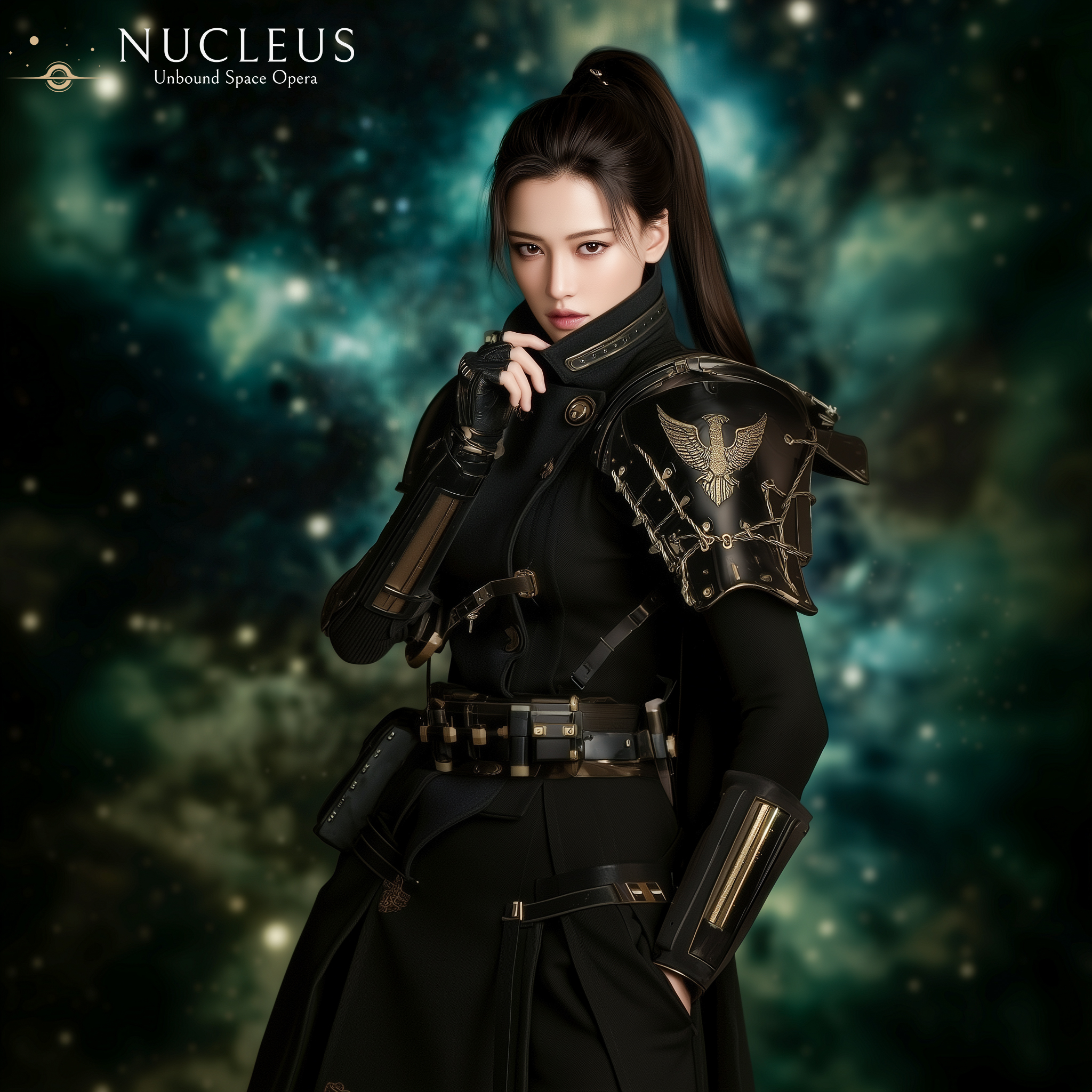
Haylen Shih
石海琳
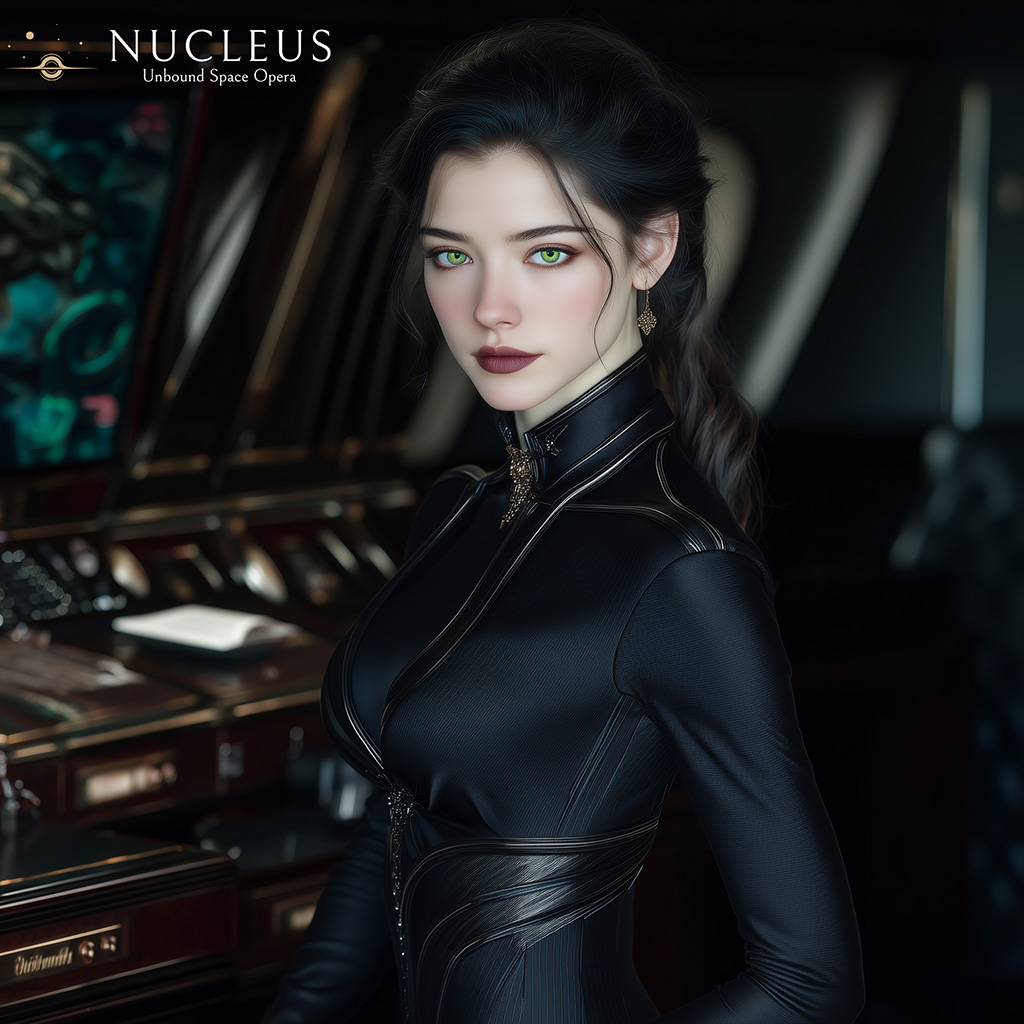
Meiya Ji
紀玫雅
